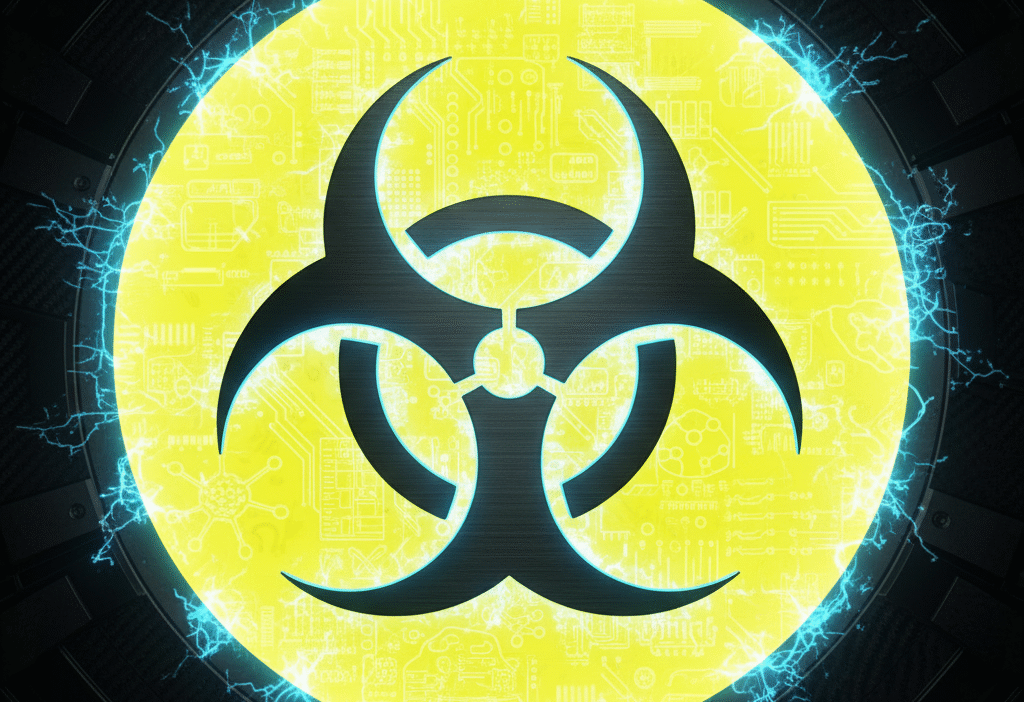
Ever seen that sharp, black ☣️ biohazard symbol on lab doors, medical waste bins, or sci-fi movies and wondered what it really means?
Created in 1966 by Charles Baldwin, this eerie-looking mark isn’t random — it’s a scientifically designed warning meant to save lives.
From hospitals to global health labs, the biohazard sign signals one thing: biological danger.
But there’s more — every curve, circle, and spacing in its design follows strict geometry for maximum visibility and fear recognition.
Let’s decode the biohazard symbol’s meaning, history, and why it remains the world’s most recognizable danger sign in 2025.
☣️ What Does the Biohazard Symbol Mean?
The biohazard symbol warns of materials or areas that contain biological agents dangerous to humans or the environment.
This includes viruses, bacteria, and toxins that can cause infection or disease.
In short, whenever you see ☣️, it means:
- Possible exposure to infectious or toxic material
- Entry restricted to trained personnel only
- Use of protective gear required
It’s a universal visual cue for “Stop — this could harm you.”
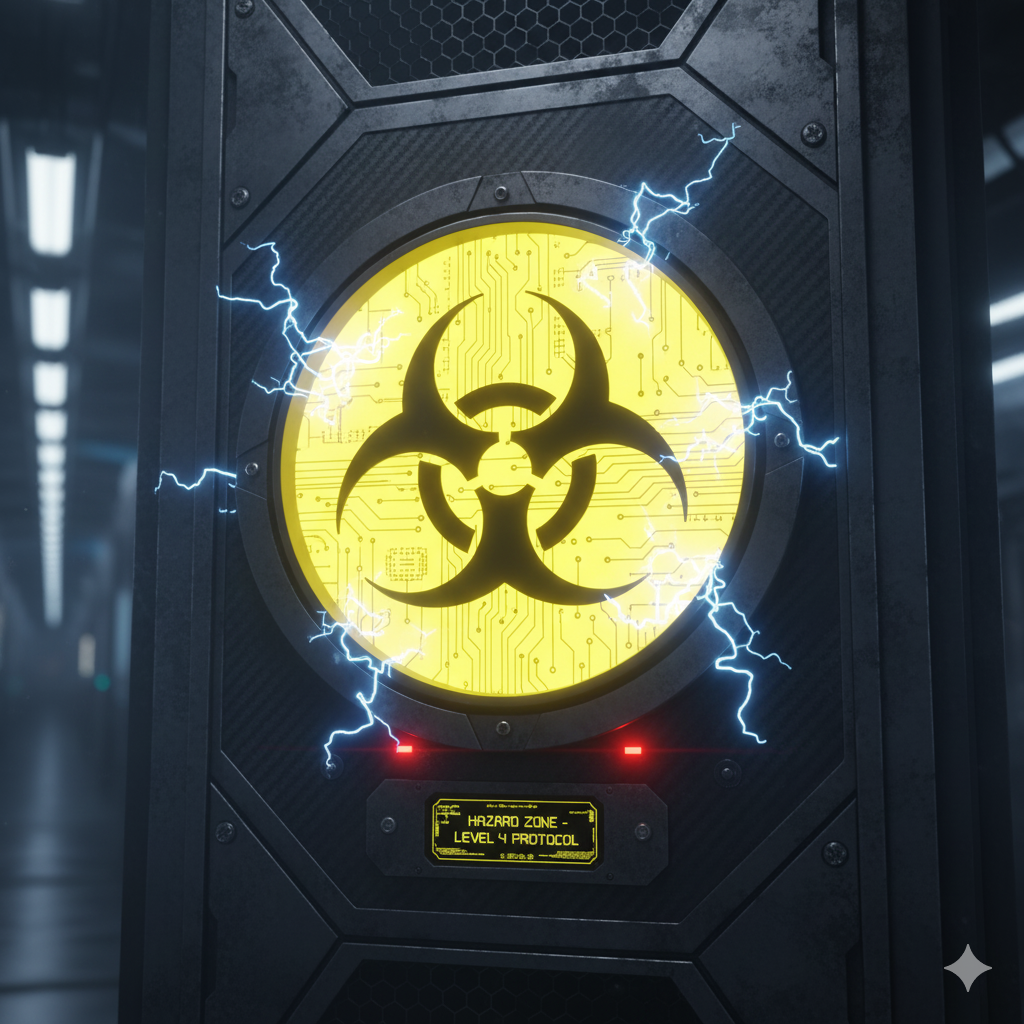
🧬 Origin & History of the Biohazard Symbol
The biohazard icon was invented in 1966 by Charles Baldwin, a Dow Chemical Company engineer specializing in biological safety.
His goal? Create a unique, easily recognizable, and language-free warning for all bio-danger materials.
Key design requirements included:
- Memorable — easily recognized
- Distinctive — not like any other symbol
- Simple — quick to draw or print
- Meaningless before use — so people associate it only with danger
Its design was tested among people from different backgrounds — those who had never seen it before found it striking and memorable, proving its success.
🧠 Design & Geometry of the Symbol
The symbol’s power lies in its mathematical precision.
It’s made of three interlocking circular shapes around a central circle, forming symmetry that the human eye instantly locks onto.
Psychologically, its design creates alertness and discomfort, grabbing attention even from a distance.
The high-contrast black-on-orange or black-on-yellow color scheme increases visibility in labs and waste areas.
Every line has purpose — no decoration, only psychological impact
🧪 Levels of Biohazard Safety
The World Health Organization (WHO) and CDC define four biosafety levels (BSL-1 to BSL-4) — the biohazard symbol is displayed accordingly.
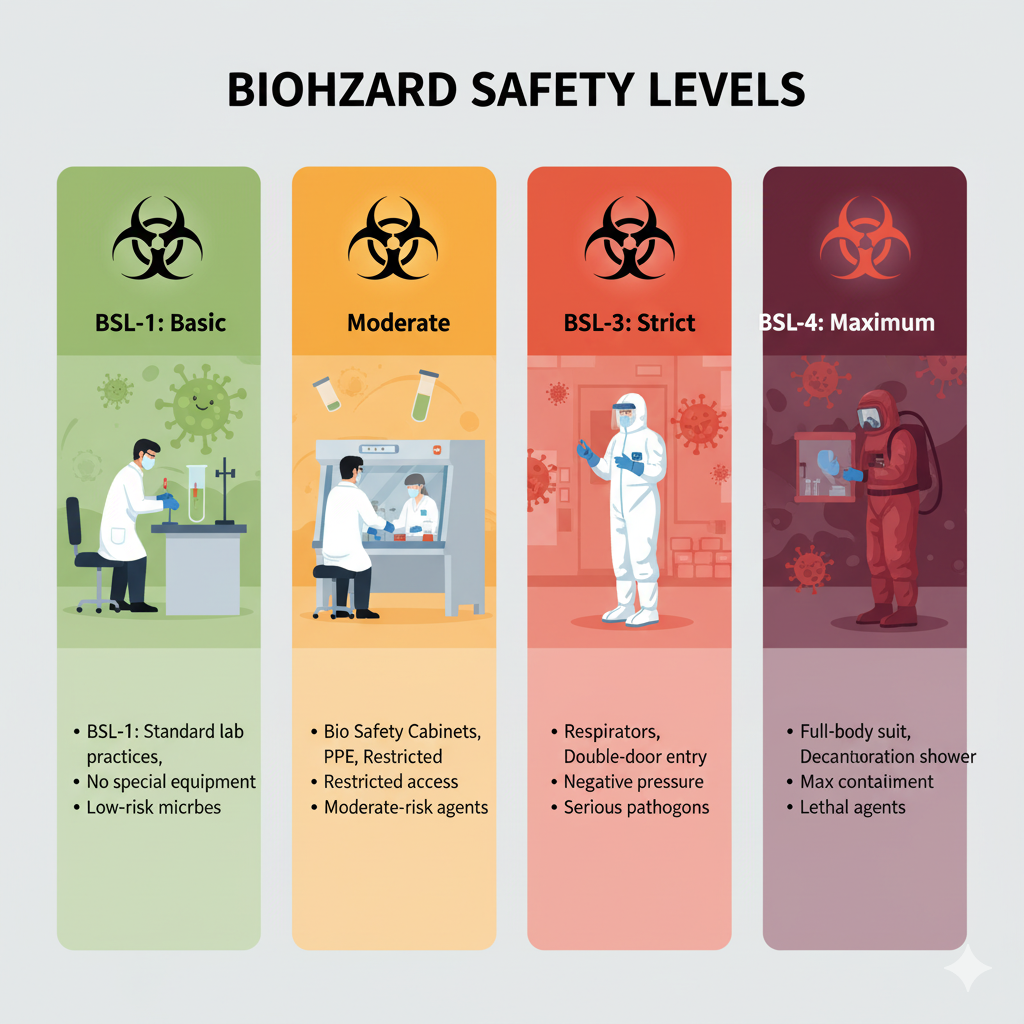
| Level | Description | Examples |
|---|---|---|
| BSL-1 | Minimal risk | Common bacteria, harmless microbes |
| BSL-2 | Moderate risk | Hepatitis, HIV (labs with precautions) |
| BSL-3 | High risk, airborne | Anthrax, SARS, COVID-19 |
| BSL-4 | Extreme risk | Ebola, Marburg virus, unknown pathogens |
Each level demands stricter containment, gear, and access control.
✝️ Cross Symbol Meaning: Faith and the Power of Transformation 2025
🧍♂️ Symbol Usage & Real-World Importance
You’ll see the ☣️ symbol on:
- Medical waste bins & bags
- Laboratories & research centers
- Hospital isolation rooms
- Transport containers of infectious samples
- Pandemic control zones
It ensures instant recognition by staff and public — even from far away or across languages.
Its use is regulated by OSHA (Occupational Safety and Health Administration) and WHO, making it a mandatory hazard identifier globally.
💀 Biohazard Symbol in Pop Culture
From movies like Resident Evil to games like The Last of Us, the biohazard symbol became an icon of fear, contagion, and apocalypse.
While originally scientific, its striking design now represents biological warfare, mutation, and viral horror in popular culture.
Even tattoos, clothing, and music covers use it to symbolize dangerous beauty, rebellion, or survival.
🧭 Difference Between Biohazard & Radiation Symbols
Though both warn of danger, their meanings differ:

| Symbol | Meaning | Common Use |
|---|---|---|
| ☣️ Biohazard | Biological threat (virus, bacteria) | Labs, hospitals |
| ☢️ Radiation | Ionizing energy threat (nuclear) | Power plants, X-ray rooms |
So, while they look similarly intense, biohazard = living threat, and radiation = energy threat.
🕉️ Hinduism Symbol Meaning Ancient Power, Spiritual Depth 2025
🧩 Color Codes & Meanings
| Color | Meaning |
|---|---|
| Orange/Red | High risk / biohazardous waste |
| Yellow | Caution or biological sample |
| Green | Decontaminated / safe zone |
| Black on White | Informational labeling |
Colors make sure staff can instantly gauge risk without reading text.
❓ FAQs About the Biohazard Symbol
Q1: What does the biohazard symbol mean?
It signals materials or areas containing infectious biological agents dangerous to humans or the environment.
Q2: Who created the biohazard symbol?
It was designed in 1966 by Charles Baldwin, a safety engineer at Dow Chemical.
Q3: Why is the biohazard symbol shaped like that?
Because it was scientifically designed to be memorable, symmetrical, and universally recognizable.
Q4: What color is used for biohazard signs?
Usually black symbol on orange or yellow background for maximum visibility and danger recognition.
Q5: Where do we see the biohazard sign?
On medical waste, lab doors, research centers, and pandemic safety zones.
🧠 Conclusion
The biohazard symbol is not just a sign — it’s a global language of caution.
Every curve and line tells us: “Life is powerful, but it can also be dangerous.”
More than half a century later, this symbol continues to protect billions by warning them of unseen biological threats — a timeless blend of science, design, and survival

Olivia Bennett is a lifestyle researcher and holistic wellness advocate specializing in mindfulness, dream healing, and manifestation techniques. With a background in psychology and meditation therapy, Olivia writes to empower readers to achieve mental clarity and emotional balance through dream awareness. Her articles provide practical tips, spiritual insights, and real-life strategies for boosting intuition and creating a more meaningful life. Olivia’s work at DreamingSign.com inspires readers to use dreams as a tool for personal transformation.