Picture this: you’re scrolling through TikTok, and you see a video where someone subtly throws shade. The comments are flooded with, “OMG, I clocked it immediately!” or “Took me a minute, but I finally clocked the reference.” You pause, a bit confused. Is this about time? A watch? Or some new internet detective code? If you’ve ever felt that moment of slang-induced bewilderment, you’re not alone. The digital lexicon moves fast, and “clock it” is one of those phrases that has shifted from literal timekeeping to a powerful tool of social perception. Let’s break down exactly what it means to “clock” something in today’s slang.
“Clock it” means “to notice, recognize, or understand something, especially something subtle, hidden, or true.” It’s a casual, observant, and often savvy way of saying you’ve caught on to a detail, a lie, a vibe, or a reference.
🧠 What Does “Clock It” Mean in Text?
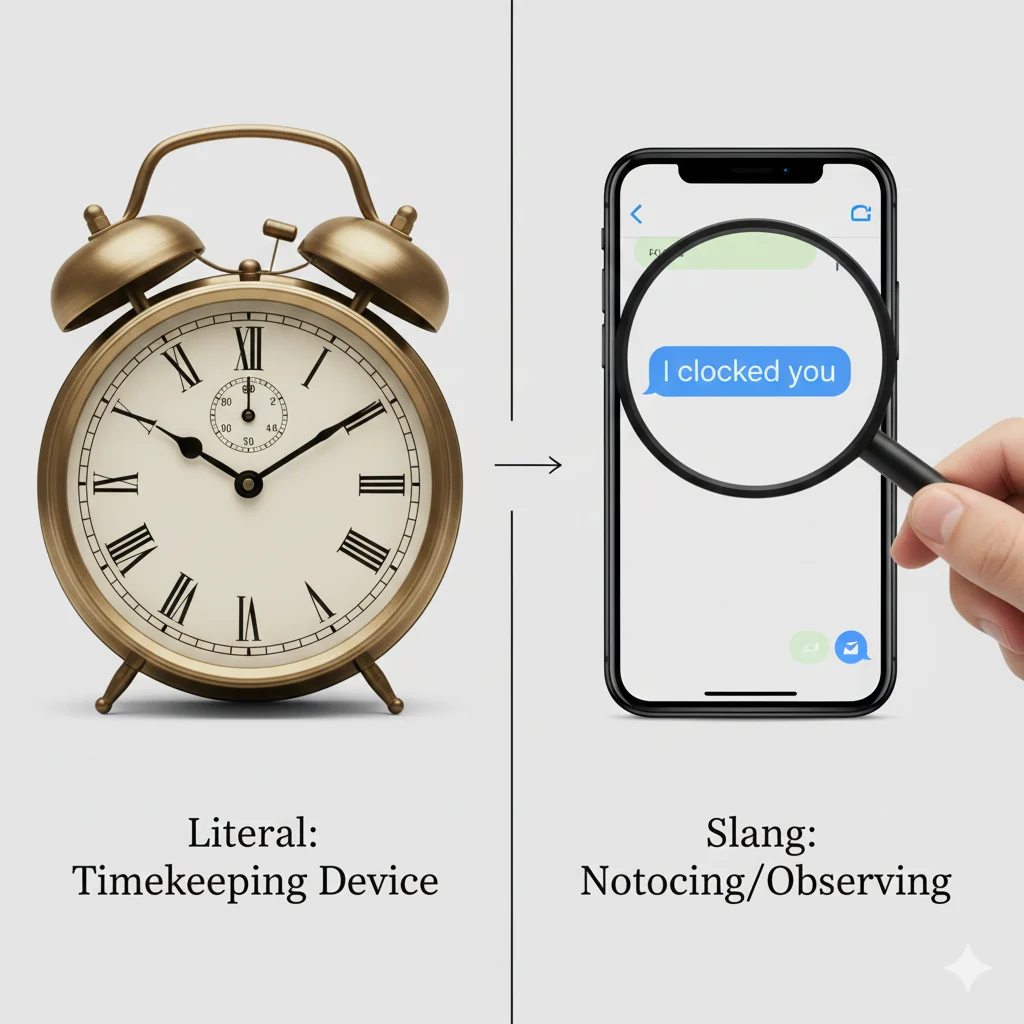
In the world of internet slang, to “clock” something has nothing to do with punching a timecard or checking the hour. Instead, it borrows from the idea of a clock’s mechanism—precise, accurate, and registering a reading. When you “clock” something, you are accurately registering or identifying it.
The term gained significant traction from Black and LGBTQ+ communities, particularly within drag culture, where “clocking” someone means to notice a flaw, see through an illusion, or identify something that was meant to be hidden (like the real gender of a drag performer before they were ready to reveal it). From there, it spread to general online use, shedding some of its confrontational edge and becoming more about keen observation.
It essentially means:
- To notice (“I clocked your new haircut immediately!”)
- To figure out/realize (“Wait, I just clocked that you were joking.”)
- To recognize as fake or false (“The comment section clocked her filter in seconds.”)
- To catch a reference (“Only true fans will clock the Easter egg in this scene.”)
In short: Clock It = To Notice/Identify = Catching the truth or a hidden detail.
📱Where Is “Clock It” Commonly Used?
You’ll find “clock it” thriving in spaces where observation, nuance, and inside knowledge are valued. It’s for the perceptive crowd.
- TikTok & Instagram Reels 🎬: The home of nuance, shade, and analysis. Used in comments and captions to show you caught a subtle edit, a trend reference, or a creator’s inside joke.
- Twitter (X) 🐦: Perfect for calling out inconsistencies, spotting deepfakes, or realizing the true meaning behind a vague tweet.
- Drag Race & Fan Communities 👑: The birthplace of much modern slang. Used when a viewer notices a queen’s wig line, a shaky pad, or a strategic edit by producers.
- Texting & DMs 💬: Used among friends when you notice something about them, their crush, or a situation. (“Okay, I clocked the way you looked at them.”)
- Gaming Chats 🎮: Sometimes used when a player figures out an opponent’s strategy or spots a hidden item.
Tone: It is overwhelmingly casual and social-media-friendly. It can be playful, impressed, shady, or matter-of-fact. It is not formal and should be avoided in professional or academic writing unless you’re very deliberately using slang.
💬 Examples of “Clock It” in Conversation
Here’s how “clock it” plays out in real, messy, lowercase-text life:
- Noticing a Change:
- A: sends a selfie
- B: wait, new eyeliner? i clocked it immediately. slay.
- Figuring Out a Truth:
- A: he said he was “busy” but posted a story at the club lol
- B: yup, we all clocked the excuse. he’s just not interested.
- Catching a Subtle Diss:
- A: did you hear her say “that’s a brave outfit choice” to me?
- B: OH I CLOCKED THAT SHADE. she’s so messy.
- Recognizing a Reference:
- A: this show has a photo of the director’s first film in the background.
- B: nice catch! I didn’t clock that easter egg.
- In a Group Chat:
- C: guys, i think my boss is about to quit.
- D: ?? why?
- C: he’s been cleaning out his office and taking long lunches. i clocked the vibe last week.
✅❌ When to Use and When Not to Use “Clock It”
✅ When to Use “Clock It”:
- With friends in casual text or voice chats.
- In social media comments to agree with an observation.
- When you want to sound perceptive and in-the-know.
- In contexts where slang and informal language are the norm (fandom spaces, meme pages).
❌ When NOT to Use “Clock It”:
- In work emails, reports, or presentations.
- In formal writing like essays or official letters.
- When speaking to someone who isn’t familiar with modern slang (like a parent or teacher).
- In urgent or serious situations where clear, literal language is needed (e.g., “Did you clock the fire alarm?” – NO. Use “notice” or “hear”).
| Context | Example Phrase | Why It Works (or Doesn’t) |
|---|---|---|
| Friend Chat | “lol i clocked your attempt to avoid them 😏” | Casual, playful, and shows social awareness. |
| Work Chat | “I noticed the error in the report.” | Polite, professional, and unambiguous. |
| Formal Email | “Please review the document at your earliest convenience.” | Formal, clear, and appropriate for the setting. |

🔄Similar Slang Words or Alternatives
“Clock it” sits in a family of slang about noticing and understanding. Here’s your cheat sheet:
| Slang | Meaning | When to Use It |
|---|---|---|
| Peep | To notice or look at. | “Did you peep her new tattoo?” More neutral than “clock.” |
| Catch | To see or understand. | “Did you catch the meaning of that lyric?” Very common. |
| Spot | To see or identify. | “I spotted you in the crowd!” Often literal. |
| Read | To critically notice and call out flaws (often playfully or ruthlessly). | “She read him for filth over that outfit.” More aggressive than “clock.” |
| Suss out | To figure out or investigate. | “I’m trying to suss out if they’re dating.” Implies a process of deduction. |
| Pick up on | To notice something subtle. | “I picked up on the tension in the room.” Standard English, but useful. |
🕓The Evolution: From Time to Truth
The journey of “clock” is fascinating. Its slang meaning likely connects to older phrases like “clocking someone” (meaning to hit them, registering a strike) and “clocking speeds” (measuring accurately). The precision of measurement evolved into the precision of perception. Its popularization through drag culture and Black Twitter cemented its place as a term for social and aesthetic detective work. It’s a word that empowers the observer, giving a name to that moment of clarity when you see what others might miss
❓ FAQs About “Clock It”
Q: Is “clock it” rude?
A: It depends on context. It can be playful among friends (“I clocked your sneaky like on his post!”). However, if used to point out an insecurity or flaw someone was trying to hide (“Everyone clocked your bad wig”), it can be very rude and shady.
Q: Can “clock it” mean to hit someone?
A: Yes, but that’s a different, older slang. “I’m gonna clock you” means to punch someone. Context is everything! The “notice” meaning is far more common in everyday digital conversation.
Q: What’s the difference between “clock” and “read”?
A: “Clock” is about the initial noticing or identifying. “Read” is what you do after you clock something—it’s the detailed, often critical, verbal takedown based on what you noticed.
Q: Is this slang new?
A: Not really! Its roots in Black and queer communities go back decades. Its explosion into mainstream internet slang, however, has happened in the last 5-10 years.
💎 Conclusion
So, the next time you see “clock it” zooming through your feeds, you’ll be in on the secret. It’s more than just seeing—it’s understanding, recognizing, and catching the subtext. It’s the digital nod of the head that says, “I see you, and I know what’s really going on.” Whether you’re clocking a friend’s new vibe, a celebrity’s Photoshop fail, or a plot twist in your favorite show, you’re using a word rich with cultural history and sharp perception. Now that you’ve clocked the meaning, you’re ready to use it (wisely!) and join the conversation of the observant. Just remember to keep it casual, keep it savvy, and maybe think twice before you clock your boss’s bad hair day to their face.

Sophia Hayes is an expert in dream psychology and subconscious symbolism with over 10 years of experience in spiritual research and metaphysical sciences. Her passion lies in helping readers unlock the hidden messages within their dreams to improve emotional healing and personal growth. Through her deep understanding of spiritual symbolism, Sophia provides insightful, research-based interpretations that bridge science and spirituality. At DreamingSign.com, she shares transformative guidance to help individuals understand their dreams and connect with their higher selves.