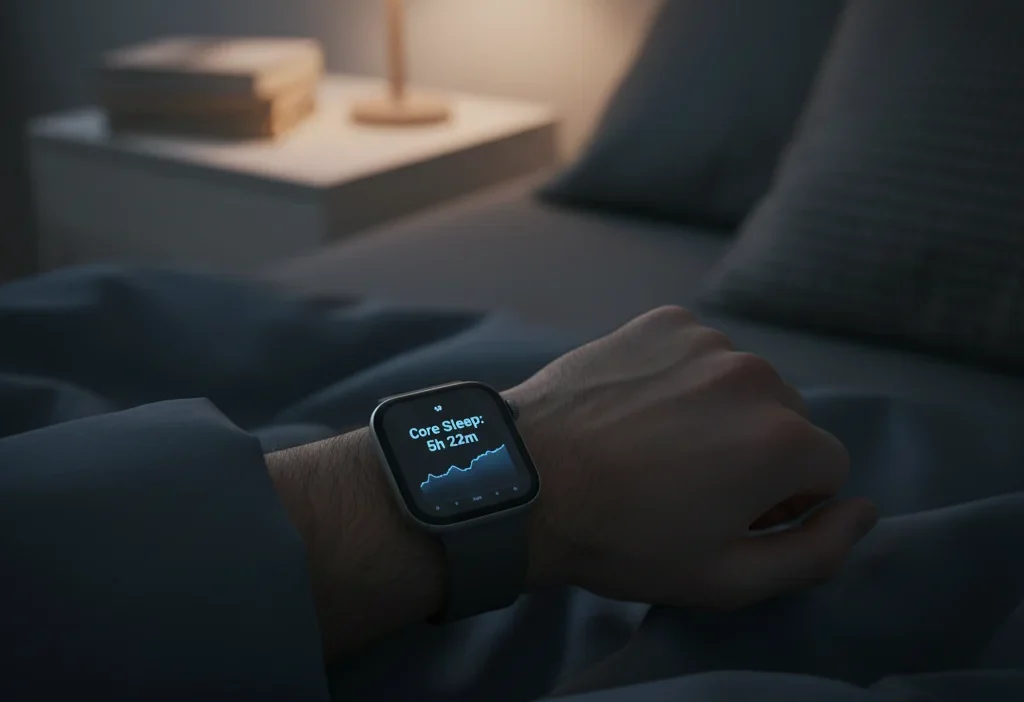
“Core Sleep” refers to the combination of the most essential, restorative stages of your sleep cycle: Deep Sleep (N3) and REM Sleep. It’s the high-quality “core” of your night that leaves you feeling physically recovered and mentally sharp. It is not a medical or scientific term, but a simplified metric used by consumer sleep trackers (like Fitbit, Oura, Whoop) to summarize your most vital sleep.
You wake up, grab your phone, and check your sleep tracker—ready to feel proud of that solid 8-hour night. But instead of a simple score, you’re met with a breakdown: “Light Sleep,” “Deep Sleep,” “REM,” and… “Core Sleep.” Huh? You stare at the graph, more confused than when you first tried to decode texting slang like “ISTG” or “FR.”
If this feels familiar, you’re not alone. As wearable tech gets smarter, the jargon on our apps gets more mysterious. “Core Sleep” has become a buzzy, yet puzzling, term showing up on millions of devices. Is it the same as deep sleep? Is more always better? Why should you even care?
Let’s demystify it. This isn’t just another piece of tech babble; understanding your Core Sleep can be the key to unlocking why you feel amazing after one 6-hour night and groggy after a “full” 9 hours. We’ll break down exactly what it means, why it’s important, and how to use this data without losing more sleep over it.
🧠 What Does “Core Sleep” Actually Mean?
While it sounds like an official sleep science term, “Core Sleep” is primarily a consumer-facing metric created by wearable companies to simplify complex sleep data. Think of it as the “highlight reel” of your night’s rest.
Your sleep cycles through different stages multiple times per night:
- Light Sleep (N1 & N2): The transition into sleep. It’s restorative but not the most critical.
- Deep Sleep (N3): The physically restorative stage. This is when tissue repair, muscle growth, and immune system strengthening happen. It’s hardest to wake from.
- REM Sleep: The mentally restorative stage. This is when dreaming, memory consolidation, and learning processing occur. Your brain is almost as active as when you’re awake.
“Core Sleep” is the combined total time you spend in these two powerhouse stages: Deep Sleep + REM Sleep.
Example: If your tracker says you slept 7.5 hours total, with 1.5 hours of deep sleep and 1.75 hours of REM, your Core Sleep would be 3.25 hours.
In short: Core Sleep = (Deep Sleep + REM Sleep) = The essential, high-quality “core” of your nightly rest.
📱 Where Is “Core Sleep” Commonly Used?
You won’t find this term in a medical journal, but you’ll definitely see it in the palm of your hand.
- Fitbit & Google Pixel Watch: Fitbit popularized the term. Their Sleep Profile feature uses “Core Sleep” as one of its key metrics.
- Oura Ring: While Oura uses terms like “Deep” and “REM,” their “Sleep Score” heavily weights these stages, effectively measuring your “core” sleep quality.
- Whoop: Focuses on sleep stages and recovery, emphasizing the critical nature of deep and REM sleep without using the exact “core sleep” label.
- Other Sleep Apps: Many third-party apps that sync with wearables (like Sleep Cycle) may adopt or reference similar consolidated metrics.
Tone & Context: This term is casual, informative, and data-driven. It’s used in the context of personal wellness, fitness tracking, and health optimization—not in clinical or formal medical discussions.
🕵️ Core Sleep vs. Deep Sleep: What’s the Difference?
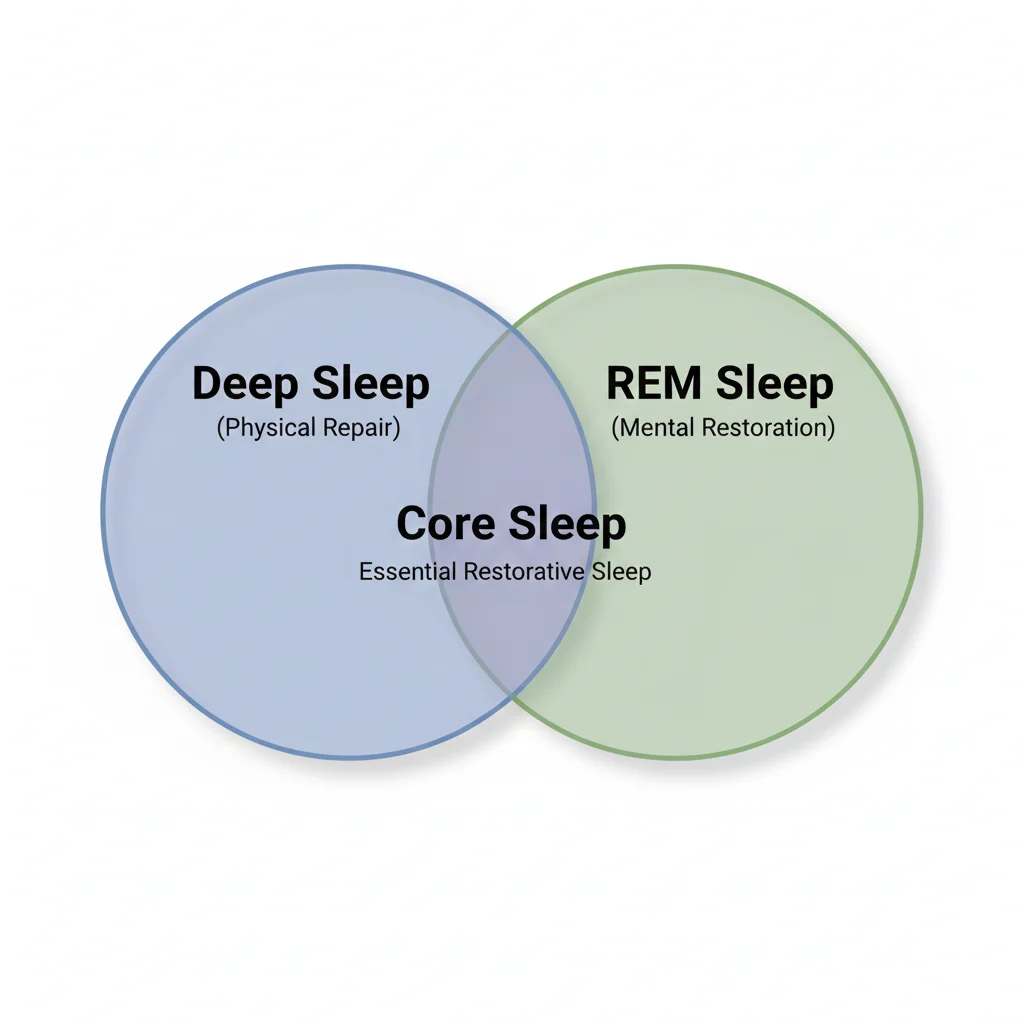
This is the most common point of confusion. They are related, but not the same thing.
- Deep Sleep is a single, specific stage of sleep (N3). It’s all about physical recovery.
- Core Sleep is a combined category that includes both Deep Sleep AND REM Sleep. It represents all the most restorative parts of your sleep cycle.
Think of it like nutrition:
- Deep Sleep = Protein (specific nutrient for muscle repair).
- REM Sleep = Omega-3s (specific nutrient for brain health).
- Core Sleep = “Essential Nutrients” (the combined category of all the most vital stuff you need).
💬 How to Talk About “Core Sleep” in Conversation
It comes up when chatting about health, wearables, or why you’re tired. Here’s how it sounds in real life:
- Comparing Tracker DataA: “Ugh, I got 8 hours but still feel wrecked.”
B: “Check your Core Sleep. Mine was low last night too, only like 2.5 hours. All that time was probably just light sleep.” - Bragging About a Good NightA: “I feel incredible today!”
B: “Nice! Great sleep?”
A: “Yeah, only 7 hours but my Fitbit says I crushed it with 4 hours of Core Sleep. 🙌” - Troubleshooting FatigueA: “I’m in bed by 10 every night but still need 3 coffees.”
B: “Maybe your sleep quality is off. Is your Core Sleep consistent? Could be stress cutting into your deep/REM.” - Discussing Routine ChangesA: “Since I started reading before bed instead of scrolling, my Core Sleep score has gone up by like 30 minutes.”
B: “No way! I need to try that.”
✅ When to Use and When Not to Use “Core Sleep”
✅ WHEN TO USE:
- When discussing data from your personal sleep tracker or wearable.
- In casual conversations about sleep quality, wellness, or fitness routines.
- When trying to understand why you feel tired despite sufficient time in bed.
- As a general goal for improving sleep quality, not just quantity.
❌ WHEN NOT TO USE:
- In a discussion with a doctor or sleep specialist. Use the specific terms “deep sleep” and “REM sleep.”
- To self-diagnose a sleep disorder. Trackers are guides, not medical devices.
- To cause unnecessary anxiety. Obsessing over every minute can be counterproductive.
| Context | Example Phrase | Why It Works |
|---|---|---|
| Chat with a Friend | “My Core Sleep was great last night, feeling solid today!” | Casual, relatable, based on shared tech use. |
| Wellness/Fitness Forum | “How do you improve your Core Sleep percentage?” | Fits the data-driven, self-optimization context. |
| Talking to a Doctor | “I’m concerned I’m not getting enough deep or REM sleep.” | Uses precise, clinical terminology for accurate help. |
🔄 Similar Sleep Tracking Terms & Alternatives
| Term | Meaning | When to Use |
|---|---|---|
| Sleep Score / Sleep Performance | An overall number (often out of 100) rating your night’s sleep. | To get a single, easy-to-understand snapshot of sleep quality. |
| Restorative Sleep | A very similar concept to Core Sleep, emphasizing the restoring benefits. | Often used interchangeably with Core Sleep. |
| Deep Sleep (N3/SWS) | The specific, physically restorative sleep stage. | When focusing on bodily recovery, growth hormone release. |
| REM Sleep | The specific, mentally restorative sleep stage associated with dreams. | When focusing on memory, learning, cognitive function, or dreaming. |
| Sleep Architecture | The overall structure and cycling of all sleep stages through the night. | In more detailed, scientific discussions about sleep patterns. |
| Time in Bed vs. Sleep Time | Differentiates total time in bed from actual time spent asleep. | When your tracker shows a big difference between the two (common!). |
🌙 How to Improve Your Core Sleep
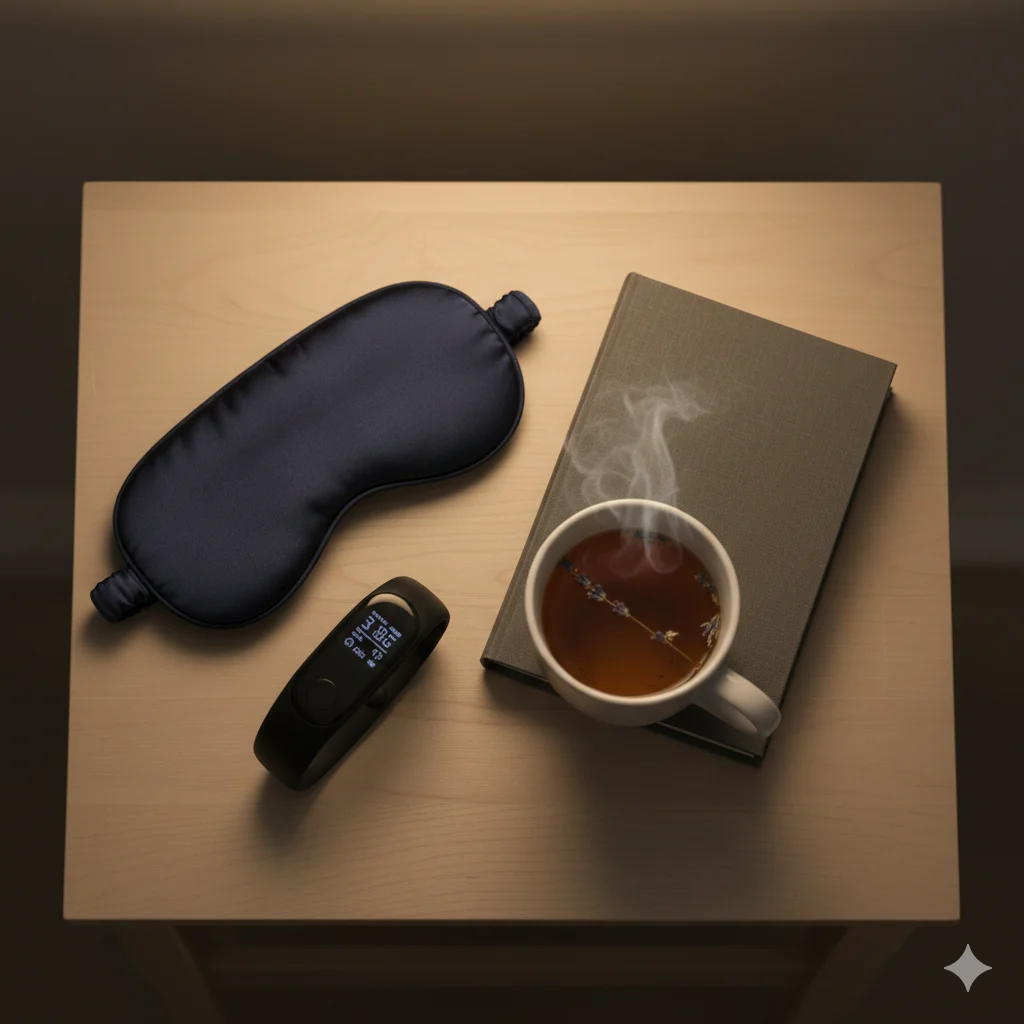
Want to boost the high-quality “core” of your night? Focus on habits that promote both deep and REM sleep:
- Be Consistent: Go to bed and wake up at the same time, even on weekends.
- Embrace Darkness & Coolness: A dark, cool (around 65°F/18°C) room is ideal for deep sleep.
- Wind Down Without Screens: The blue light from phones/tablets suppresses melatonin, disrupting your cycle. Read a book or listen to a podcast instead.
- Watch Caffeine & Alcohol: Avoid caffeine after 2 PM. While alcohol may make you drowsy, it severely fragments sleep and wrecks REM sleep later in the night.
- Manage Stress: Anxiety is a major sleep disruptor. Try journaling, meditation, or light stretching before bed.
- Use Your Tracker Wisely: Look for weekly trends, not night-by-night fluctuations. The data is best for spotting patterns, not setting daily pass/fail tests.
❓ FAQs About Core Sleep
Q: How much Core Sleep do I need?
A: There’s no universal perfect number, as it depends on age and the individual. However, deep sleep typically makes up 13-23% of an adult’s night, and REM makes up 20-25%. So, for an 8-hour night, a healthy “Core Sleep” range might be roughly 2.5 to 4 hours combined. Focus on how you feel, not just the number.
Q: Is Core Sleep the same as a full sleep cycle?
A: No. A full sleep cycle (Light -> Deep -> Light -> REM) takes about 90 minutes. Core Sleep is the most valuable parts (Deep & REM) extracted from all your cycles throughout the night.
Q: Are sleep trackers accurate for measuring Core Sleep?
A: They are good relative guides, not absolute medical devices. A wrist-worn tracker can reliably show you trends—e.g., “my Core Sleep is lower on weeknights when I’m stressed.” It may not be perfectly precise on the exact minutes every night, but the patterns it reveals are incredibly valuable.
Q: Should I worry if my Core Sleep is low one night?
A: Not at all! Sleep varies naturally. A bad night, stress, or a late workout can affect it. Only be concerned if you consistently see very low numbers and you constantly feel fatigued during the day. In that case, it’s a useful data point to discuss with a healthcare professional.
🔚 Conclusion
So, the next time “Core Sleep” pops up on your app, you won’t be left in the dark. Remember, it’s your wearable’s way of highlighting the VIP sections of your night’s rest—the deep, physical repair and the REM-driven mental reboot. It’s a powerful tool for shifting your focus from sheer quantity (“I got 8 hours!”) to genuine quality (“How much of that was truly restorative?”).
Use this knowledge not to stress over every decimal point, but to become a detective of your own habits. Notice what gives you a great Core Sleep score and that refreshed feeling, and what doesn’t. In the end, the best metric is still how you feel when you open your eyes in the morning. Let “Core Sleep” be your guide to better habits, not your judge and jury. Now, go get some quality shut-eye! 😴

Sophia Hayes is an expert in dream psychology and subconscious symbolism with over 10 years of experience in spiritual research and metaphysical sciences. Her passion lies in helping readers unlock the hidden messages within their dreams to improve emotional healing and personal growth. Through her deep understanding of spiritual symbolism, Sophia provides insightful, research-based interpretations that bridge science and spirituality. At DreamingSign.com, she shares transformative guidance to help individuals understand their dreams and connect with their higher selves.