Picture this: You’re scrolling through your feed and see a post about a local “grassroots” campaign to save a park. A friend texts about the “grassroots” support for a new indie artist. Even in a gaming forum, someone mentions a “grassroots” player movement. You nod along, but a tiny voice in your head whispers… “Wait, does that just mean basic? Like, grass and roots?” If you’ve ever felt a flicker of confusion, you’re not alone. This term is everywhere, from serious news to casual chats, and its meaning has evolved. Let’s dig into it.
“Grassroots” refers to something that originates from and is powered by the everyday people in a community, not from the top down. It’s a descriptive and often positive way of talking about collective, authentic, bottom-up action.
🧠 What Does “Grassroots” Mean in Text and Slang?
At its core, “grassroots” is a metaphor. Just as grass gets its strength and growth from its roots deep in the soil, a grassroots movement gets its power from the fundamental level of society—the people.
In formal contexts, it traditionally describes political or social campaigns that start locally among ordinary citizens, like a neighborhood group advocating for a new stop sign or a community organizing a cleanup.
However, in modern texting and social media slang, its use has broadened. Here, calling something “grassroots” often means it’s:
- Authentic and organic: Not manufactured by corporations or influencers.
- Community-driven: Powered by the passion of fans, locals, or members.
- DIY and independent: Starting small, without big money or institutional backing.
Example in a sentence: “The fan support for that band is totally grassroots—it all started from their TikTok lives and word of mouth.
In short: Grassroots = From the People = Authentic, Bottom-Up Action.
📱 Where Is “Grassroots” Commonly Used?
The term has roots in politics but has spread like, well, grass! You’ll find it in:
- Social Media Activism 🗣️: Hashtag movements, community mutual aid funds, and local advocacy on Twitter (X), Instagram, and Facebook.
- Fandoms & Entertainment 🎵: Describing how an indie artist, a small-streamer, or a niche show gained popularity “from the ground up.”
- Gaming 🎮: Referring to player-organized tournaments, modding communities, or campaigns to change a game feature.
- Business & Startups 💡: Used for marketing that feels “homegrown” or for companies that highlight community support.
- Texting & DMs 💬: To describe any effort that feels personal, community-oriented, and not corporate.
Tone: It’s generally neutral to positive and informative. It’s not inherently casual like “LOL” but is perfectly friendly for social media and conversational contexts. It adds a layer of credibility and authenticity to what you’re describing.
Why “Grassroots” Matters: More Than Just a Word
Understanding “grassroots” is key to understanding modern culture. It’s the opposite of “astroturfing” (fake, manufactured support that looks real). When something is genuinely grassroots, it carries weight. It signifies trust, collective power, and a story people love—the little guy, the community, the passionate underdog making a difference. In a world of top-down advertising and influencer marketing, the “grassroots” label is a badge of honor for authentic connection.
The Evolution: From Politics to Everyday Slang
The term originated in American politics in the early 1900s, comparing political work to mining—digging down to the “grass roots” for solid support. It was popularized by the Progressive Party. Over decades, it crossed over into general use for any citizen-led initiative. The digital age supercharged this, allowing “grassroots” organizing to happen at lightning speed online, thus cementing its place in our daily digital vocabulary.
💬 Examples of “Grassroots” in Conversation
Here’s how it flows in real chats:
- In Social Organizing:
- A: “How did the food drive get so big so fast?”
- B: “It was all grassroots! Just neighbors posting on the town Facebook group and dropping stuff off.”
- In Music Fandom:
- A: “I can’t believe they sold out the stadium!”
- B: “I know! Their growth has been so grassroots. Remember when we were just sharing their YouTube links in 2019?”
- In Gaming:
- A: “This new game mode is awesome. Did the developers plan it?”
- B: “Nah, it was a grassroots idea from the player forums that they actually listened to!”
- In Business Chat:
- A: “Our marketing budget is tiny.”
- B: “Let’s try a grassroots approach. Get local micro-influencers and genuine user reviews.”
- In Texting About School:
- A: “The petition to extend library hours got 500 signatures!”
- B: “Love to see that grassroots student power 👊”
🕓 When to Use and When Not to Use “Grassroots”
✅ When to Use “Grassroots”:
- To describe community-led initiatives or support.
- To highlight the authentic, non-corporate origin of something.
- In discussions about activism, fandom, local business, or independent projects.
- When you want to give credit to collective people-power.
❌ When NOT to Use “Grassroots”:
- For things that are clearly top-down or corporate-funded (that’s the opposite!).
- In very formal, technical reports where “community-based” or “bottom-up” might be clearer.
- As a casual filler word—it has a specific meaning.
- To describe something that is simply “popular”; it needs that element of organized, collective action from regular people.
Context Comparison Table:
| Context | Example Phrase | Why It Works / Doesn’t Work |
|---|---|---|
| Community Chat | “The block party is a totally grassroots effort!” | Perfect. Highlights neighbor-led organizing. |
| Music Review | “Her success is a grassroots story, built on live streams and fan love.” | Great. Explains an organic career path. |
| Corporate Memo | “We initiated several grassroots marketing initiatives.” | Use Caution. Can sound inauthentic if not truly community-driven. |
| Academic Paper | “The study examines grassroots political mobilization.” | Correct. Standard use of the formal term. |
🔄 Similar Slang Words or Alternatives
| Slang / Term | Meaning | When to Use It |
|---|---|---|
| Organic | Grown naturally, not forced or paid for. | For growth or popularity that happened naturally. Less organized than “grassroots.” |
| DIY (Do It Yourself) | Made or done independently, without professional help. | Focuses on the hands-on action of individuals. “Grassroots” is more about collective action. |
| Community-Driven | Powered by the people in a community. | A great, clear synonym. Slightly more formal. |
| Bottom-Up | Starting at the lowest level and moving upward. | The direct antonym of “top-down.” Excellent for strategy discussions. |
| Homegrown | Developed locally or independently. | Often for talent, businesses, or movements that originated in a specific place. |
| Astroturfing 🚫 | Fake grassroots; artificially manufactured support. | When you need to call out inauthentic or paid efforts disguised as public opinion. |
❓ FAQs About “Grassroots”
Q: Is “grassroots” a positive word?
A: Typically, yes. It carries connotations of authenticity, people-power, and democracy. However, context matters. A politician might dismiss a “grassroots protest” as unserious, so tone is key.
Q: Can one person be “grassroots”?
A: Not really. The term implies collective action. One person can start a grassroots movement, but the essence is in many people joining in.
Q: What’s the opposite of grassroots?
A: Top-down or astroturfing. Top-down means led by authorities (opposite structure). Astroturfing is fake grassroots (opposite authenticity).
Q: Is it “grassroots,” “grass roots,” or “grass-roots”?
A: “Grassroots” (one word) is the most common and accepted modern spelling for the adjective and noun in this context.
Q: How do I know if something is truly grassroots?
A: Look for signs: Does it rely on small donations/volunteers? Did it start in a community space (online or offline)? Is its leadership made up of everyday people? If yes, it’s likely the real deal.
🌱 Conclusion
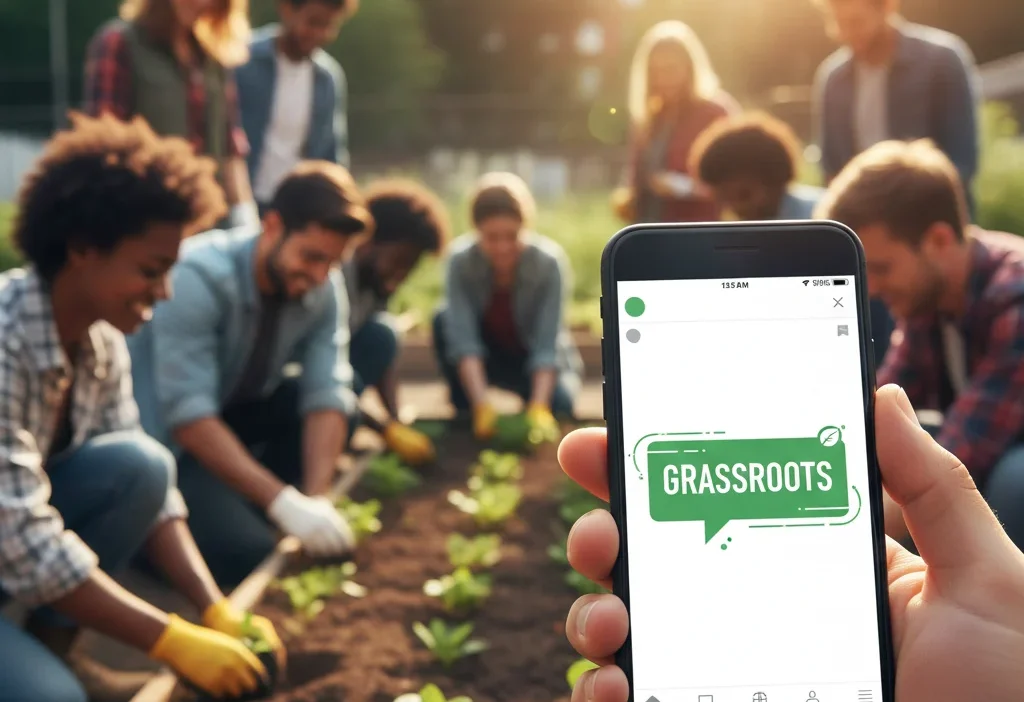
So, the next time you see “grassroots,” you’ll see more than just a word. You’ll see a story of collective power—whether it’s neighbors planting a garden, fans boosting their favorite artist, or gamers changing their virtual world. It’s a testament to the idea that real change often doesn’t start with a loudspeaker from above; it starts with a whisper between friends that grows into a chorus. In our hyper-connected world, understanding this term helps you recognize and maybe even build the authentic, people-powered movements that shape our culture, one shared post, one text, and one community effort at a time. Now that’s grassroots.

Sophia Hayes is an expert in dream psychology and subconscious symbolism with over 10 years of experience in spiritual research and metaphysical sciences. Her passion lies in helping readers unlock the hidden messages within their dreams to improve emotional healing and personal growth. Through her deep understanding of spiritual symbolism, Sophia provides insightful, research-based interpretations that bridge science and spirituality. At DreamingSign.com, she shares transformative guidance to help individuals understand their dreams and connect with their higher selves.