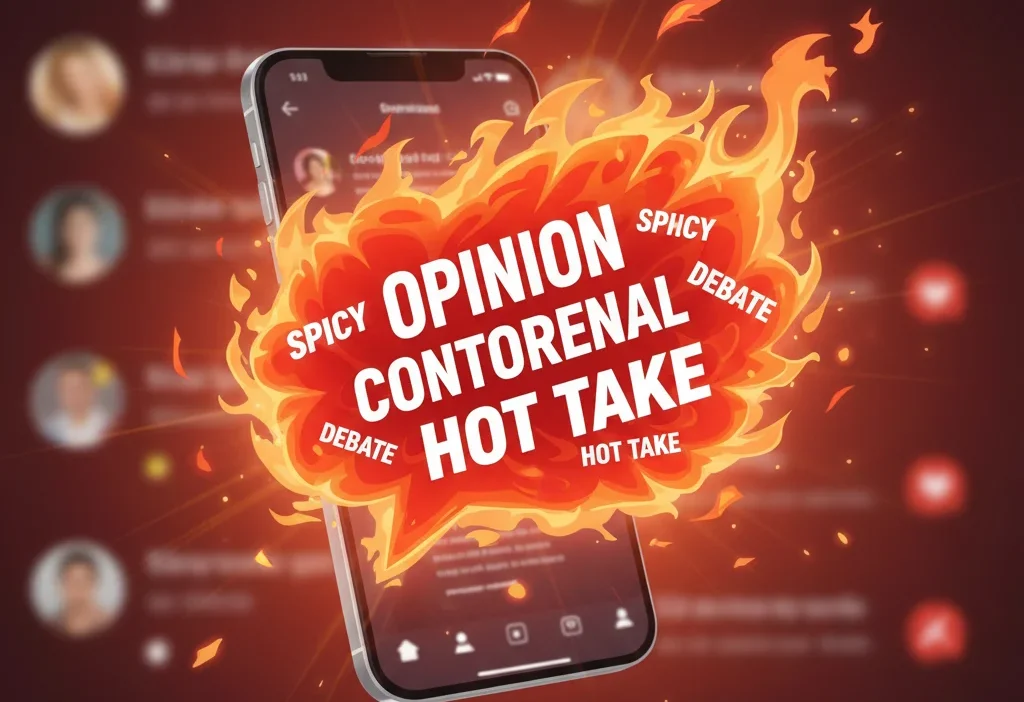
Ever been scrolling through Twitter or TikTok and seen someone drop a sentence that starts with “Okay, hot take…” followed by an opinion that made you either nod vigorously or gasp out loud? I remember the first time I saw it was in a thread about pineapple on pizza. Someone tweeted, “Hot take: Pineapple belongs on pizza, and the haters just have boring taste buds.” I paused, halfway through my own slice (plain cheese, of course). Was this an insult? A challenge? A joke? I was confused, intrigued, and instantly understood the feeling it conveyed, even if the term was new. That’s the power of “hot take”—it’s a verbal flare gun, signaling that a strong, personal, and often debated opinion is incoming.
“Hot take” means a strong, often controversial or unpopular opinion. It’s a casual and attention-grabbing way to preface a bold viewpoint before sharing it in conversation or online.
🧠 What Does “Hot Take” Mean in Text & Social Media?
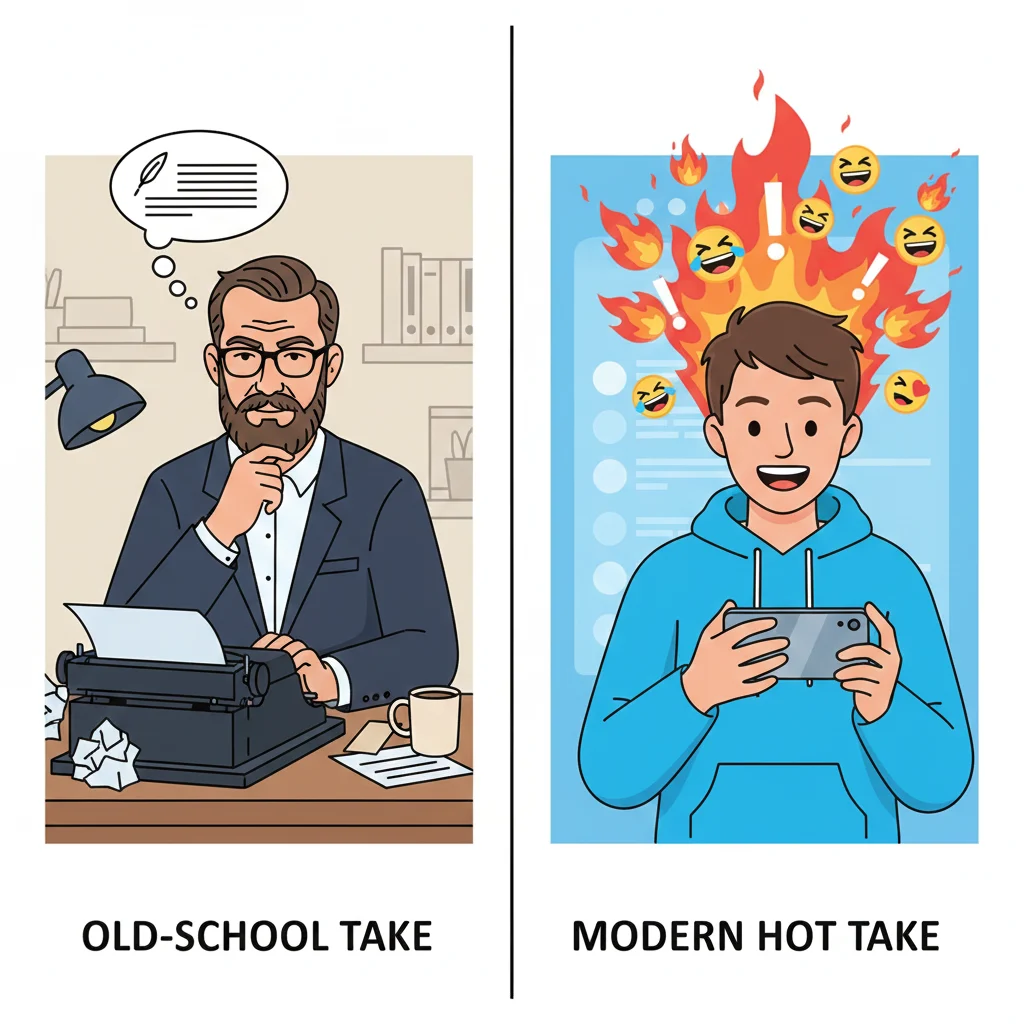
At its core, a hot take is exactly what it sounds like: an opinion that is “hot,” or fresh off the press, and often “spicy” or controversial. It’s a take that hasn’t been cooled by overthinking or social consensus. The phrase comes from sports journalism, where an analyst would give an immediate, reactive “take” on a just-finished game. In the fast-paced world of social media, it evolved to mean any quick, strongly held opinion shared publicly.
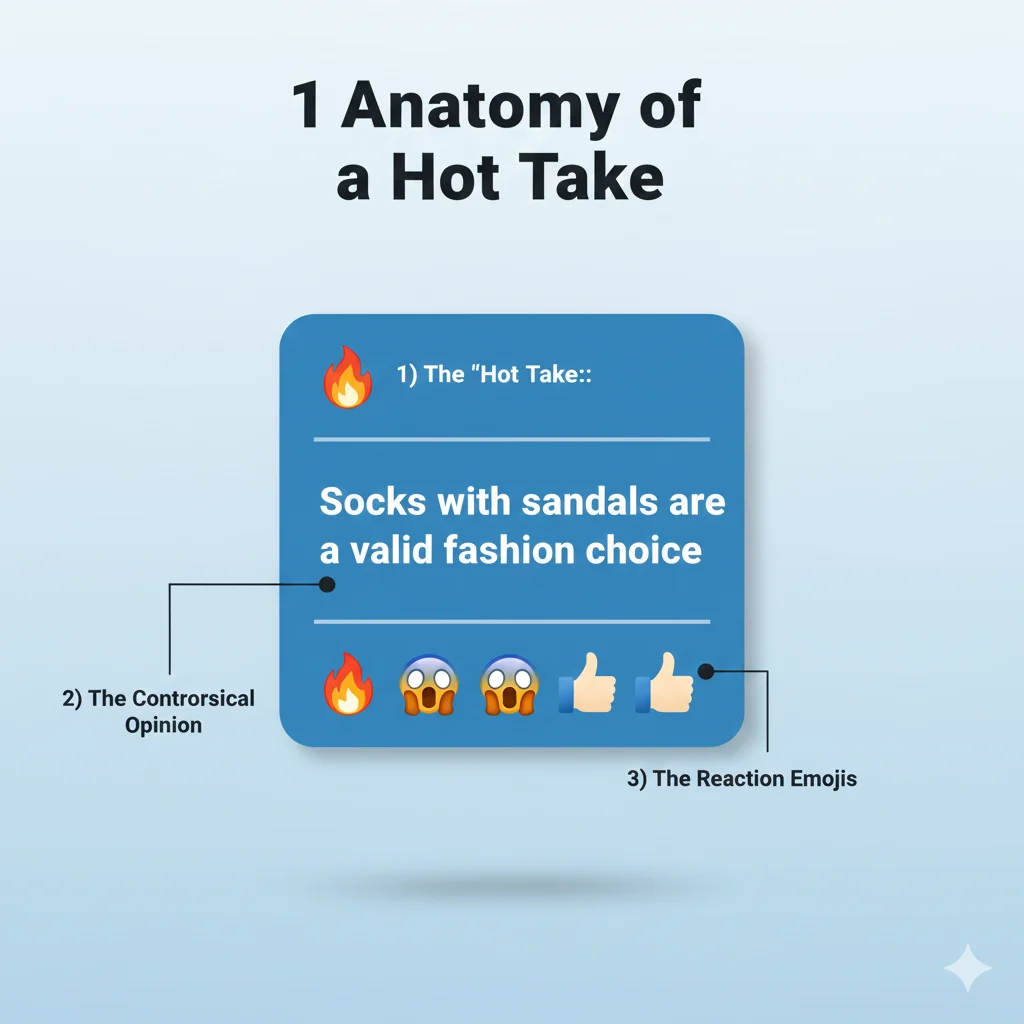
In texting, DMs, and social media captions, leading with “hot take:” is like raising a digital hand and saying, “I’m about to say something that might start a debate, but I stand by it.” It’s less about being factually correct and more about expressing a personal, unfiltered perspective. The opinion itself can range from silly (“Hot take: Cereal is a soup”) to serious (“Hot take: The 9-to-5 work model is obsolete”).
In short: Hot Take = A Bold, Immediate Opinion = A spicy, often controversial personal viewpoint shared to provoke thought or reaction.
📱 Where Is “Hot Take” Commonly Used?
This slang thrives in environments built for quick, public discourse. You’ll most commonly find it:
- Twitter/X 🐦: The undisputed kingdom of hot takes. The character limit encourages punchy, immediate opinions.
- TikTok & Instagram Reels 🎬: Often used in video captions or as text overlays where creators share controversial opinions on trends, pop culture, or life advice.
- Reddit 🤖: Prefaces posts in discussion forums (subreddits) like r/unpopularopinion or r/changemyview.
- Group Chats 💬: Used among friends to share a strong opinion in a playful, dramatic way (e.g., “Hot take: Our group chat needs a pizza order STAT”).
- Sports & Pop Culture Commentary 🎤: Still heavily used in its original context by bloggers, podcasters, and YouTube commentators.
Tone & Formality: “Hot take” is decidedly casual and informal. It’s perfect for social media and friendly conversations but would be wildly out of place in formal reports, academic writing, or serious professional emails. Its tone can be playful, provocative, or confidently argumentative.
💬 Examples of “Hot Take” in Conversation
Here’s how “hot take” pops up in real, authentic chats:
Example 1 (Pop Culture):
A: Did you see the new superhero movie?
B: Yeah! Okay, hot take: the villain’s backstory was more compelling than the hero’s entire arc.
A: WHOA. Spicy. But… you might be right.
Example 2 (Food Debate):
Friend 1: sends a pic of chocolate chip cookies with raisins
Friend 2: Hot take: Raisins in cookies are a crime against dessert.
Friend 1: 🔥🔥🔥 The truth hurts.
Example 3 (Friendly Ranking):
A: Ranking our friends by who would survive a zombie apocalypse. Go.
B: Hot take: Sarah would die first because she’s too nice to run.
A: LOL brutal but accurate.
Example 4 (Social Media Caption):
Post: “Hot take: Making your bed every morning is a waste of time that could be spent getting extra sleep. Fight me. 😴 #unpopularopinion”
Example 5 (Gaming Chat):
Player 1: This new map is so bad.
Player 2: Hot take: It’s not the map, it’s our strategy.
Player 1: Ouch. Callout.
🕓 When to Use and When Not to Use “Hot Take”
✅ When to Use “Hot Take”:
- In casual group chats to share a strong, playful opinion.
- On social media platforms (Twitter, TikTok, Reddit) to engage your audience in debate.
- When you want to preface that your opinion is personal and not necessarily mainstream.
- In pop culture, sports, or food discussions where debate is part of the fun.
- When you’re ready for (and welcome) polite disagreement or discussion.
❌ When NOT to Use “Hot Take”:
- In formal writing (reports, essays, professional emails).
- During serious, sensitive discussions (e.g., politics, personal grievances, health advice).
- To state an objective, verifiable fact. (e.g., “Hot take: water is wet” is just incorrect usage).
- When you are not open to any counter-opinions or discussion.
- In urgent or critical communication where clarity is paramount.
| Context | Example Phrase | Why It Works (or Doesn’t) |
|---|---|---|
| Twitter Debate | “Hot take: Summer is overrated. Fall supremacy forever. 🍂” | Perfect for the platform—casual, provocative, and sparks engagement. |
| Work Chat | “Hot take: The TPS reports are fun.” | Avoid. Unprofessional and confusing in a work context. Instead, just give clear feedback. |
| Formal Email | “Please find my hot take on the Q3 projections attached.” | Never. Use “analysis,” “perspective,” or “review” instead. |
| Friend Debate | “Hot take: That band’s first album was their best and it’s not even close.” | Great! Sets the stage for a fun, opinionated discussion among friends. |
🔄 Similar Slang Words or Alternatives
“Hot take” has cousins in the slang dictionary. Here’s how they compare:
| Slang | Meaning | When to Use It (vs. “Hot Take”) |
|---|---|---|
| Unpopular Opinion | An opinion you believe most people disagree with. | More focused on consensus. Use when you feel you’re in the minority. “Hot take” is more about the boldness of delivery. |
| Spill the Tea | To share gossip or juicy information. | About secret info, not personal opinion. Use for drama, not debate. |
| I Said What I Said | A defiant way to stand by a statement. | Used after stating an opinion, as a mic-drop. “Hot take” is the preface before you say it. |
| Low-Key / High-Key | To feel something somewhat (low-key) or intensely (high-key). | About the intensity of a feeling. “I low-key agree with that hot take.” |
| Cap / No Cap | A lie (cap) or the truth (no cap). | About truthfulness. “That’s a wild hot take, no cap.” |
❓ FAQs About “Hot Take”
Is “hot take” negative?
Not inherently. It signals a bold opinion, which can be positive, negative, or neutral. The reaction it gets depends on the opinion itself and the audience.
Can a hot take be a fact?
No. By definition, a hot take is an opinion or interpretation. If something is a proven fact, calling it a “hot take” is incorrect and ironic.
How is it different from an “unpopular opinion”?
They overlap, but the emphasis is different. An “unpopular opinion” focuses on the lack of popularity. A “hot take” emphasizes the boldness, immediacy, and provocative delivery of the opinion, which may or may not be unpopular.
What’s the opposite of a hot take?
A “cold take” or “lukewarm take”—an opinion that is obvious, widely agreed upon, boring, or late to the conversation. (e.g., “Cold take: That movie that won Best Picture 10 years ago was pretty good.”).
Conclusion
So, the next time you see “hot take” lighting up your screen, you’ll know exactly what’s happening: someone is gearing up to share a piece of their mind, served fresh and with a side of spice. It’s the digital age’s way of flagging a personal perspective that’s meant to be chewed on, debated, and engaged with. Whether you’re using it to defend your favorite controversial movie or scrolling through a thread of them, understanding this term helps you navigate the fun, fiery world of modern opinion-sharing. Just remember the golden rule: use your hot takes wisely, know your audience, and maybe keep them out of the company Slack. Now, if you’ll excuse me, I have a hot take about putting ice in wine that I need to go tweet.

Olivia Bennett is a lifestyle researcher and holistic wellness advocate specializing in mindfulness, dream healing, and manifestation techniques. With a background in psychology and meditation therapy, Olivia writes to empower readers to achieve mental clarity and emotional balance through dream awareness. Her articles provide practical tips, spiritual insights, and real-life strategies for boosting intuition and creating a more meaningful life. Olivia’s work at DreamingSign.com inspires readers to use dreams as a tool for personal transformation.