Have you ever received a text reply like “IDM” and wondered what it truly means? You’re not alone. Millions search “what does IDM mean in text”, “IDM meaning in texting”, and “how to respond to IDM” every day.
In this ultimate guide, we will cover everything you need to know about IDM in 2025—from casual texting to professional use, social media, gaming, iPhone apps, Urdu translations, and more.
IDM stands for “I Don’t Mind.”
It is a texting abbreviation that indicates flexibility, agreement, or neutrality. It is commonly used across texting, social media, gaming, and professional contexts.
This article answers all of these with examples, tone cues, and interactive elements to enhance comprehension.
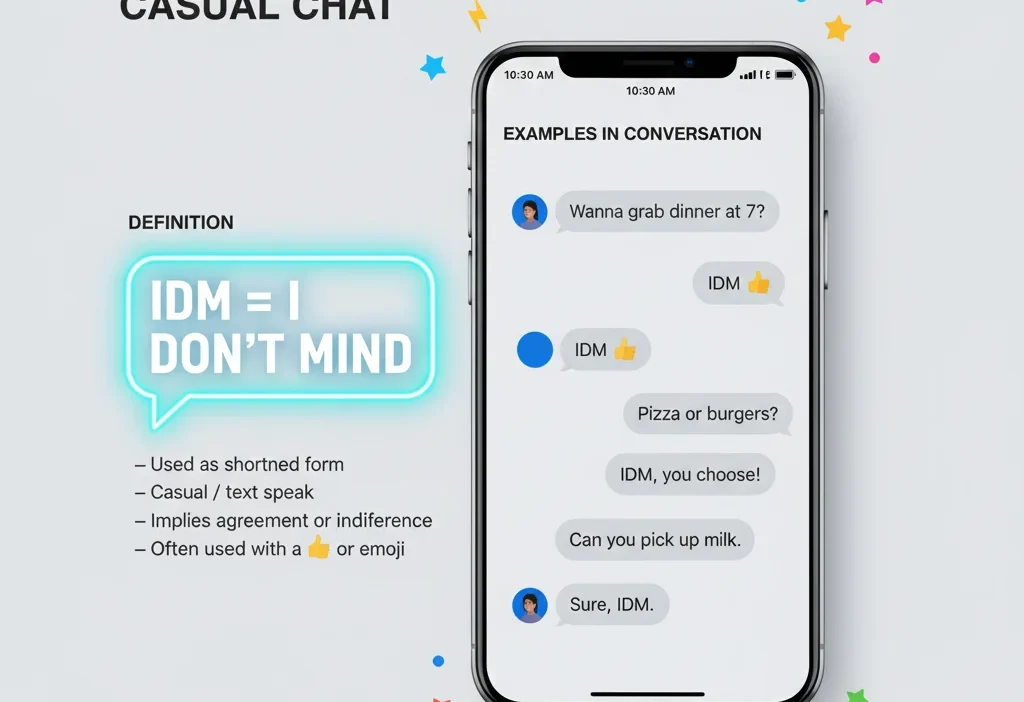
IDM Meaning in Casual Texting
IDM = I Don’t Mind
Usage
- Shows flexibility or neutrality
- Avoids lengthy explanations
- Offers a quick, neutral response
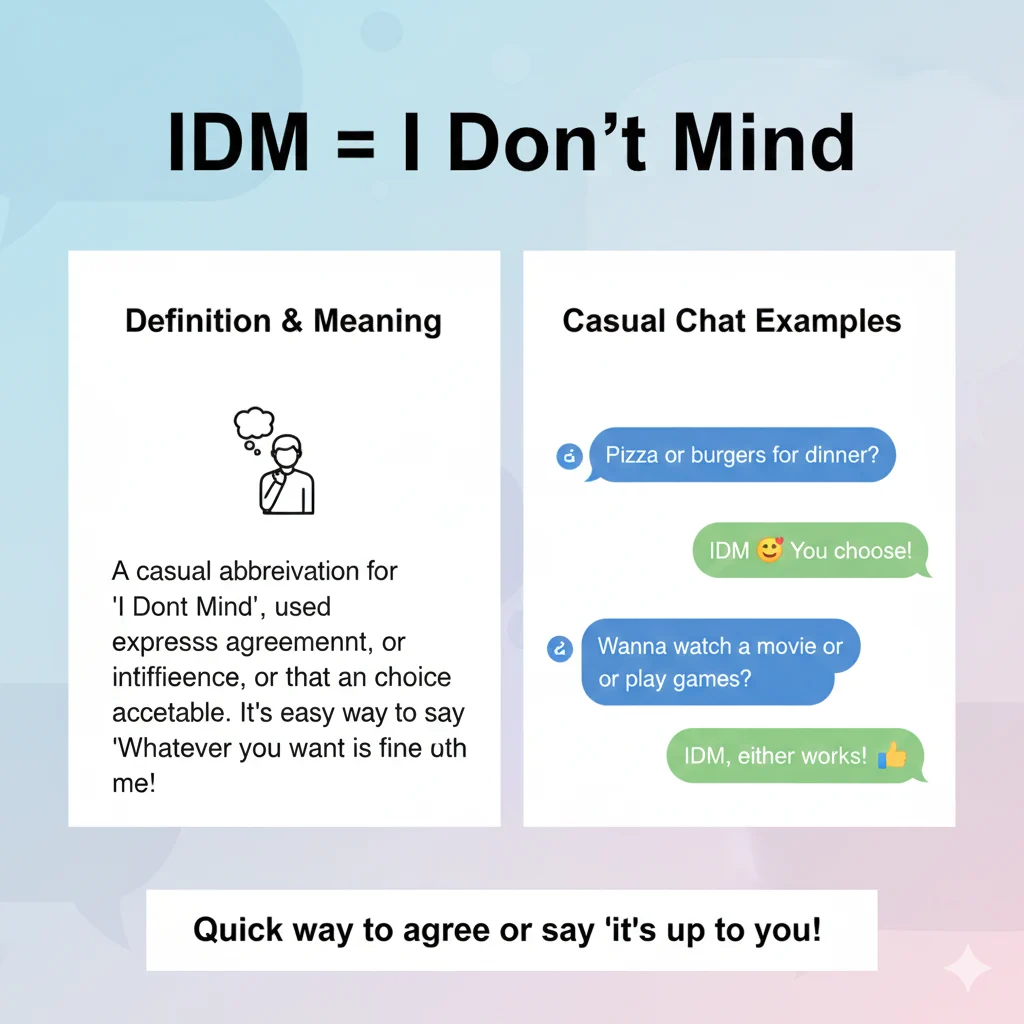
Examples
- “Do you want coffee or tea?” → IDM
- “Movie or dinner?” → IDM, your choice
- “Meet today or tomorrow?” → IDM 😊
Emojis and punctuation can turn IDM friendly, playful, or neutral.
Understanding Tone in Casual Chats
Tone can completely change IDM’s meaning:
- Playful IDM:
- “Ice cream or cake? IDM 😎” → relaxed and fun
- Neutral IDM:
- “Coffee or tea?” → IDM → shows flexibility without emotion
- Dry IDM:
- “Movie or dinner?” → IDM → could indicate boredom or indifference
Always check previous messages to interpret IDM correctly.
How to Respond to IDM in Texts
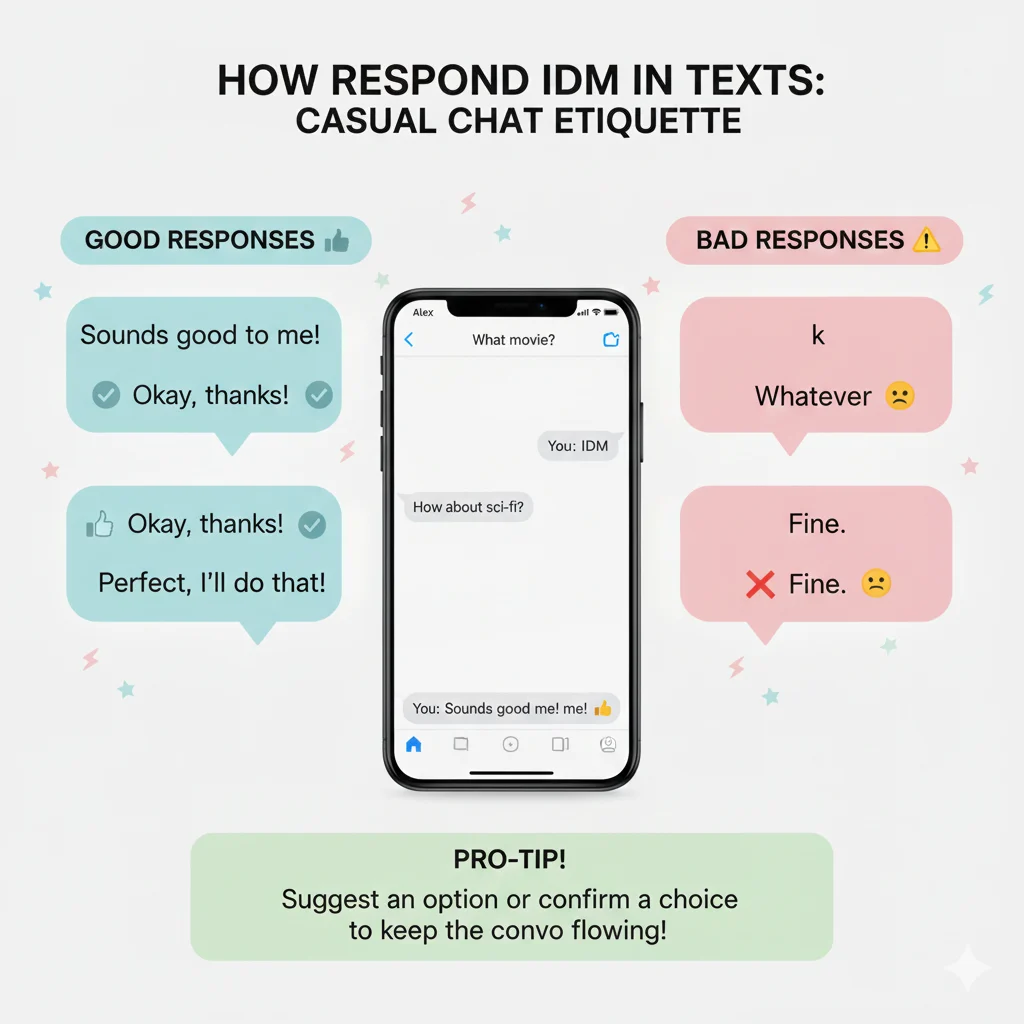
Casual Replies
- “Cool, 7 pm works for me.”
- “Alright, your choice.”
Engagement Encouragement
- “Okay 😊 what would you prefer?”
- “Any preference at all?”
When Unsure About Interest
- “Got it—what do you prefer though?”
Proper responses prevent miscommunication and maintain conversational flow.
Professional Use Cases (Expanded and Detailed)
IDM can be used in professional contexts, but tone, platform, and relationship are critical.
Workplace Chats (Slack, Teams)
- Example: “Do you want me to schedule the meeting now or later?” → IDM
- Alternative phrasing: “I’m flexible; please advise what works best.”
- Use tone indicators like 👍, 🙂, or “:)” for clarity
Emails
- Avoid casual abbreviation
- Use polite professional alternatives:
- “I don’t mind which time suits you best”
- “I’m happy to adjust to your schedule”
Corporate Chat Etiquette
- IDM is acceptable with close colleagues
- Always pair with emojis or polite follow-up:
- “IDM 😊 Which time works better?”
- “I’m fine with either option; please advise.”
Executive & Formal Contexts
- Avoid IDM abbreviation entirely in executive emails
- Use formal alternatives:
- “I am comfortable with either choice; please advise.”
- “Either option works for me. Kindly confirm your preference.”
Proper professional usage avoids misinterpretation and maintains workplace etiquette.
IDM Meaning in Social Media
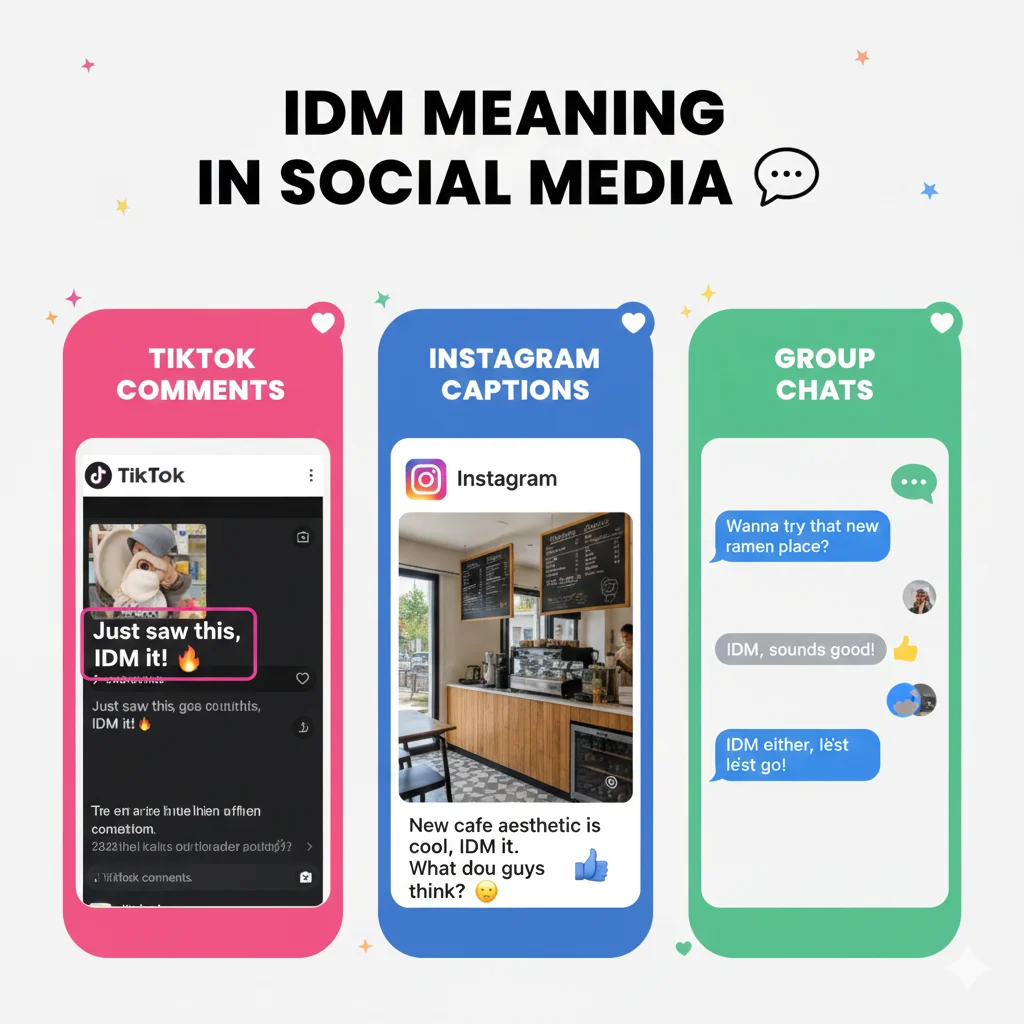
Snapchat
- Quick neutral response to DMs or story replies
- Example: “Snap now or later?” → IDM
- Casual agreement in DMs
- Example: “Post this photo today or tomorrow?” → IDM
TikTok
- Comment or private message agreement
- Example: “Trend 1 or 2?” → IDM
Tone, emojis, and context determine the correct interpretation of IDM in social media.
IDM Meaning in Gaming
- Shows neutrality in team or strategy selection
- Examples:
- “Red or blue team?” → IDM
- “Rush or defend?” → IDM
- Avoids conflict, improves collaboration, and shows flexibility
IDM in gaming is widely recognized among players for quick, neutral decision-making.
IDM Meaning on iPhone
- Rarely refers to Internet Download Manager
- Primarily in iMessage or WhatsApp, IDM = I Don’t Mind
In mobile messaging apps, context and emojis remain crucial.
IDM Meaning from a Girl or Guy
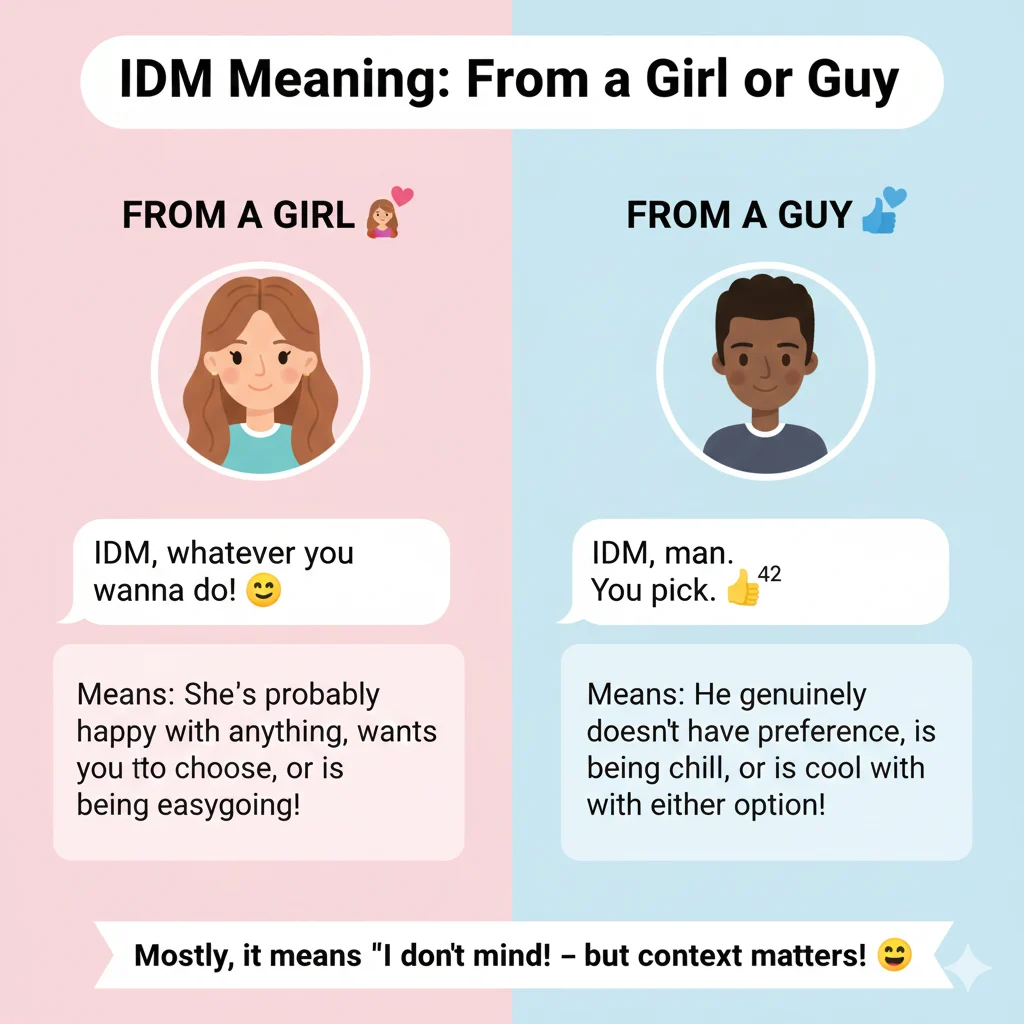
- Positive signals: easygoing, flexible, trusting
- Low-interest signals: short replies, no emojis, no follow-up
Context, tone, and message history are key to decoding IDM meaning from a girl or guy.
IDM vs Similar Text Slang
| Slang | Meaning | Tone | Example |
|---|---|---|---|
| IDM | I Don’t Mind | Polite, flexible | “Coffee or tea?” → IDM |
| IDK | I Don’t Know | Uncertain | “Who won?” → IDK |
| IDC | I Don’t Care | Can sound rude | “Movie?” → IDC |
| OK | Agreement | Neutral | “See you at 5” → OK |
| HMU | Hit Me Up | Casual | “Party tonight?” → HMU |
Helps avoid misunderstandings and miscommunication.
IDM Meaning in Urdu
IDM ka matlab hai “I Don’t Mind”, yani “Mujhe farq nahi padta”.
Example
- “Tum chai lena chahte ho ya coffee?” → IDM
How to Avoid Misunderstanding IDM
- Check context, tone, and emojis
- Review previous messages
- Ask politely if unclear
- In professional chats, pair IDM with follow-up or formal phrasing
Prevents misinterpretation and keeps conversations smooth.
FAQs
1. What does IDM mean in text?
IDM = I Don’t Mind, indicating flexibility in casual texting.
2. How to respond to IDM in chats?
Reply politely or clarify: “Cool, your choice” or “What would you prefer?”
3. What does IDM mean on social media?
Shows neutral or casual agreement on Snapchat, Instagram, TikTok.
4. Can IDM mean something else?
Rarely, IDM may refer to Internet Download Manager or Intelligent Dance Music, but in texting it almost always means I Don’t Mind.
5. What does IDM mean from a girl or guy?
Indicates flexibility, comfort, or easygoing behavior. Context and emojis reveal intent.
Tips & Tricks for Using IDM
- Use in casual and informal professional chats
- Emojis clarify tone
- Follow up to maintain conversation flow
- Professional alternatives: “I’m flexible; please advise what works best”
Example: “IDM 😊 What do you want to do?”
Conclusion
IDM is more than three letters—it’s a window into modern texting culture. Whether in casual chats, Snapchat DMs, Instagram messages, TikTok, gaming, or professional settings, IDM signals flexibility, friendliness, and professionalism when used correctly.
The key? Context, tone, and emojis. Master IDM meaning in texting, how to respond naturally, and when to use it professionally to communicate confidently, avoid misunderstandings, and maintain smooth conversations.
Next time someone texts IDM, you’ll know exactly how to respond—casual, playful, or professional—like a pro.

James Thornton is a researcher and writer focused on sleep science, lucid dreaming, and the neurological aspects of dream formation. With a strong academic foundation in cognitive science, James specializes in analyzing how dreams influence memory, creativity, and emotional health. His contributions to DreamingSign.com are well-known for their scientific accuracy and thought-provoking insights, helping readers understand the powerful connection between the brain and the dream world.