
You’re scrolling through a science explainer, or maybe you’re helping a friend with their math homework, and you hit the phrase: “inversely proportional.” Your eyes glaze over for a second. It sounds like one of those stiff, technical terms that lives only in textbooks. You get the vibe that one thing goes down as another goes up… but what’s the real story? What does it actually mean for things in your world, like your phone battery or how crowded the bus feels? If you’ve ever nodded along while secretly thinking, “I should probably know this,” you’re in the perfect spot. Let’s crack this concept open together, no jargon allowed.
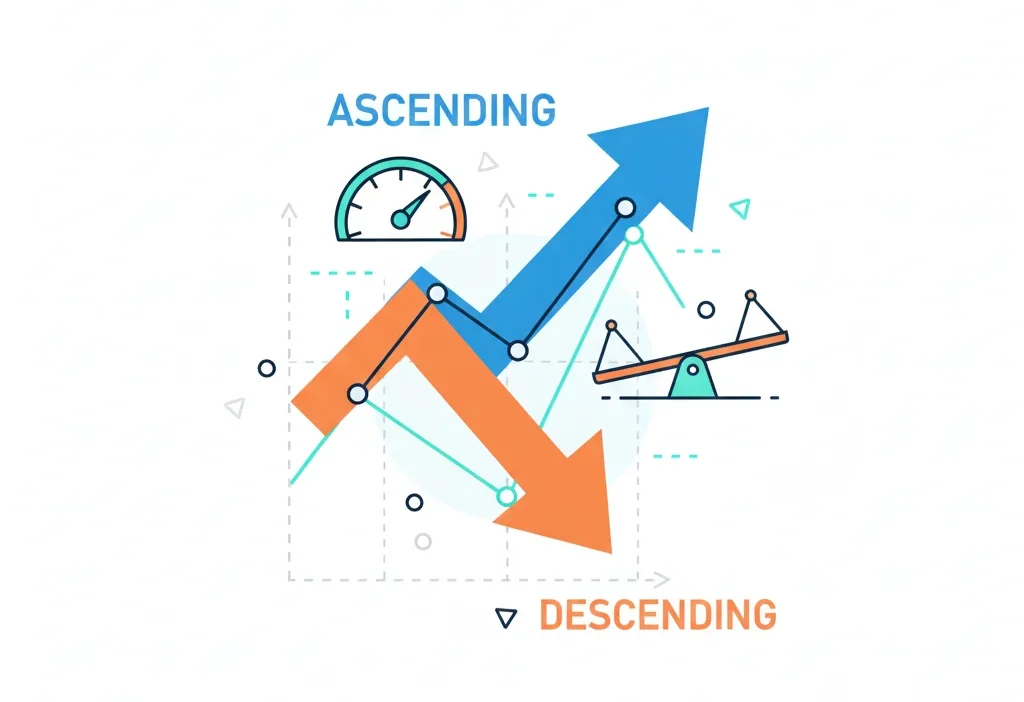
In simple terms, two things are inversely proportional when one increases, the other decreases by the same factor, and vice-versa. Their product always stays constant. It’s a mathematical relationship describing a perfect “seesaw” effect. For example, if you drive twice as fast, you take half the time to get somewhere.
🧠 What Does Inversely Proportional Mean in Text & Math?
Let’s strip away the complexity. When we say two quantities are inversely proportional (or in inverse variation), we’re describing a specific kind of dance between them: an opposite dance.
Imagine a classic playground seesaw. When one side goes up, the other side goes down. That’s the core idea. More formally, if you have variable A and variable B, they are inversely proportional if doubling A causes B to be halved, or tripling A causes B to be divided by three. The magic number here is the product of the two. That product always remains the same (constant).
The standard formula is: A × B = k, where k is the constant.
Example in a sentence: “The time it takes to paint a fence is inversely proportional to the number of painters; more helpers mean less time for everyone.”
In short: Inversely Proportional = An Opposite Relationship = As one value goes up, the other goes down proportionally, keeping their multiplication result fixed.
📱 Where Is This Concept Commonly Used?
You won’t text “BRB, our schedules are inversely proportional 😆” to a friend (though you could!). But understanding this idea helps make sense of tons of real-world and digital contexts:
- 📚 Academic & Study Help: Foundational in math, physics, chemistry, and economics courses. It’s a key search term for students.
- ⚙️ Science & Engineering Explainer Videos: YouTube and TikTok creators use it to explain concepts like pressure & volume (Boyle’s Law) or resistance & current in circuits.
- 📊 Data Analysis & Infographics: Used in articles and social media posts to describe relationships in data, like product demand vs. price.
- 💻 Programming & Tech Forums: Developers discuss algorithm efficiency, where time complexity can be inversely proportional to memory usage.
Tone: It’s a formal, technical concept but is used in casual, explanatory contexts (like this article!) to make learning easier.
The classic seesaw: a perfect real-world model of an inverse relationship.
💬 Examples of Inverse Proportionality in Conversation & Real Life
Let’s see this concept in action with chat-style and real-world scenarios.
- Planning a Group Trip:
- A: “The hotel cost per person is inversely proportional to how many people we cram in a room. More friends = cheaper for everyone! 🤑”
- B: “So if 4 people is $50 each, 8 people would be… $25? Sold!”
- Gaming Strategy:
- A: “Why is my character so slow with this new sword? ⚔️”
- B: “Attack damage and swing speed are often inversely proportional in this game. You hit harder, but you’re slower.”
- Cooking Help:
- A: “This recipe says bake for 30 mins at 350°F. What if I do 400°F? 🔥”
- B: “Cooking time is roughly inversely proportional to temperature. Higher temp = less time. Maybe try 20-25 mins, but watch it!”
- Work Project:
- Manager: “The completion time for this data entry is inversely proportional to the team size. Let’s pull in two more interns to finish by Friday.”
- Real-Life Physics: Boyle’s Law. For a fixed amount of gas at constant temperature, Pressure (P) and Volume (V) are inversely proportional: P × V = constant. Squeeze a gas (volume down), and its pressure goes up.
🕓 When to Use and When Not to Use This Term
✅ When to Use “Inversely Proportional”:
- When explaining a clear, mathematical, or scientific opposite relationship.
- In educational settings, tutorials, or explainer content.
- When you want to sound precise about how two factors affect each other.
- In data analysis to accurately describe a trend.
❌ When Not to Use “Inversely Proportional”:
- In casual, everyday conversation where simpler phrases work better (e.g., “the more the merrier” or “it’s a trade-off”).
- To describe relationships that are loosely opposite but not mathematically precise.
- In urgent or emotional contexts—it’s a clinical term.
| Context | Example Phrase | Why It Works |
|---|---|---|
| Tutoring a Friend | “Think of it like this: speed and travel time are inversely proportional for your trip.” | Clear, educational, and establishes the precise relationship. |
| Casual Chat Alternative | “The faster you drive, the sooner you’ll get there. It’s a trade-off!” | Simple, relatable, and gets the point across without technical terms. |
| Formal Report/Email | “Our analysis indicates a strong inverse proportionality between marketing spend and customer acquisition cost.” | Professional, precise, and appropriate for a technical audience. |
🔄 Similar Terms or Alternatives
While “inversely proportional” is specific, other terms describe related ideas.
| Term | Meaning | Key Difference / When to Use |
|---|---|---|
| Directly Proportional 📈 | As one increases, the other increases at the same rate. (A = kB) | The opposite relationship! Use when things move in the same direction. |
| Inversely Related | A general term meaning as one goes up, the other tends to go down. | Less mathematically strict. It implies the trend but not the fixed product. |
| Trade-off ⚖️ | A balance between two opposing things where gaining one means losing the other. | Broader and less mathematical. Perfect for everyday life and casual conversation. |
| Negative Correlation 📉 | A statistical relationship where variables move in opposite directions. | Used specifically in data/statistics, implying a trend line but not necessarily a perfect inverse formula. |
Direct vs. Inverse: Knowing the difference is key.
❓ FAQs About “Inversely Proportional”
Q: What’s a super simple everyday example?
A: The speed of a car vs. trip time. Double your speed, halve your time. Speed × Time = Distance (constant).
Q: How is it different from “directly proportional”?
A: Direct proportion is a “same direction” relationship (like hours worked & money earned). Inverse proportion is an “opposite direction” relationship (like hours worked & time left in the day).
Q: Does it always have to be a perfect mathematical curve?
A: In theory and in many physics laws, yes—it’s precise. In everyday speech, people often use it more loosely to mean “generally, as one goes up, the other goes down.”
Q: Can you have inverse proportion with more than two things?
A: Yes! A concept called “joint variation” can involve multiple variables. For example, a task’s time might be inversely proportional to both the number of workers and the number of machines.
Wrapping It Up
So, the next time you hear “inversely proportional,” don’t let it intimidate you. Just picture that trusty seesaw. It’s a powerful, elegant concept that explains why your phone battery dies faster when the screen is brighter (brightness and battery life are inversely related), why a smaller team takes longer on a project, or why you turn up the volume when someone moves farther from the speaker. It’s the hidden mathematical rule behind countless “trade-offs” in our world. Understanding this simple opposite dance gives you a clearer lens to view everything from homework problems to everyday decisions. Now you’re not just nodding along—you get it. 🔄

James Thornton is a researcher and writer focused on sleep science, lucid dreaming, and the neurological aspects of dream formation. With a strong academic foundation in cognitive science, James specializes in analyzing how dreams influence memory, creativity, and emotional health. His contributions to DreamingSign.com are well-known for their scientific accuracy and thought-provoking insights, helping readers understand the powerful connection between the brain and the dream world.