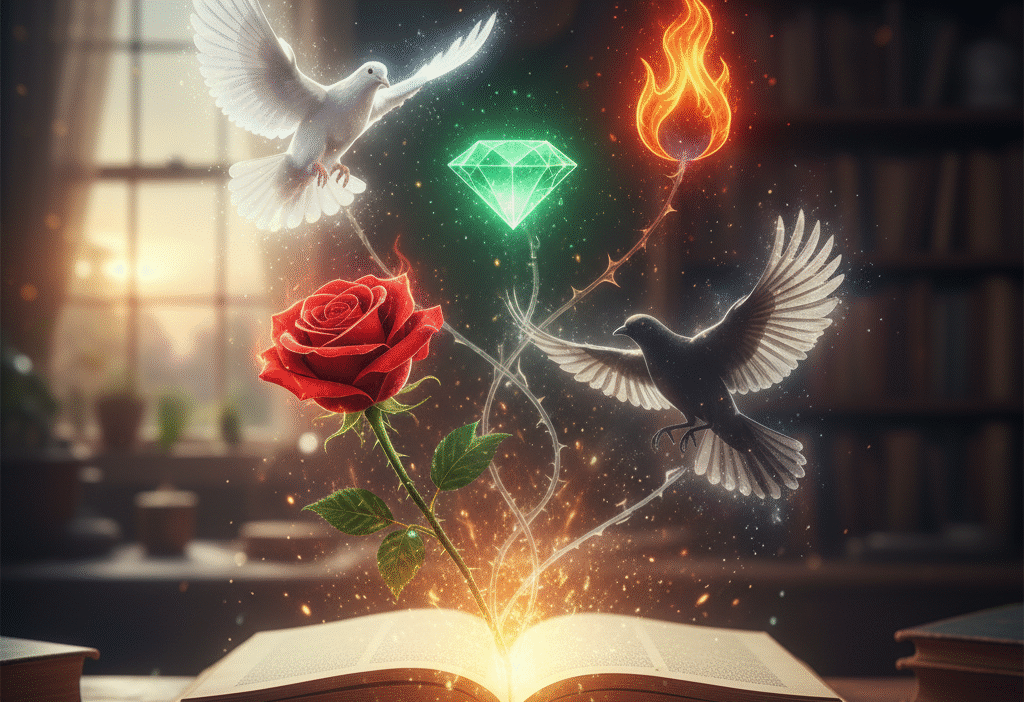
Did you know that over 70% of classic novels use symbolism to express hidden meanings readers often miss? 📚 From the green light in The Great Gatsby to the mockingbird in To Kill a Mockingbird, symbols transform simple stories into timeless messages.
Every reader wants to understand what authors truly mean — not just what they say. That’s exactly why literary symbols matter. They reveal emotion, culture, and truth in ways words alone can’t.
Whether you’re a student analyzing a poem, a writer polishing your own story, or a reader curious about deeper meaning, this guide uncovers what literary symbols are, how they work, and real examples that make you “see” the unseen.
Let’s decode the hidden language of literature — one symbol at a time.
🔍 What Is a Literary Symbol? (Quick Definition for Featured Snippet)
A literary symbol is an object, color, character, or event that represents a deeper idea or concept beyond its literal meaning — like a dove symbolizing peace or a storm representing chaos.
🧠 Why Symbols Matter in Literature
Symbols make a story memorable, emotional, and multi-layered. Instead of telling readers what to feel, authors show it through images, colors, and recurring objects.
- 💡 They add emotional depth — readers connect with abstract ideas easily.
- 🧩 They create patterns — making themes feel unified.
- 🎭 They invite interpretation — keeping readers thinking long after reading.
In modern SEO language, symbolism is like storytelling’s “metadata” — invisible but essential for meaning.
📘 Types of Literary Symbols (with Meaning)
1. Universal Symbols
These have meanings understood worldwide.
Examples:
- The Sun – life, power, positivity
- Water – rebirth, purity, cleansing
- Darkness – evil, ignorance, death
2. Cultural Symbols
Meaning depends on culture or religion.
Examples:
- Lotus flower (Asia) – purity, spiritual awakening
- Cross (Christianity) – sacrifice, faith
- Evil Eye (Middle East) – protection from harm
3. Contextual Symbols
These gain meaning only inside a specific story.
Examples:
- The Green Light in The Great Gatsby – unreachable dreams
- The Conch Shell in Lord of the Flies – civilization and order
- The Mockingbird in To Kill a Mockingbird – innocence
4. Natural Symbols
Nature often mirrors emotion or fate.
Examples:
- Storms – conflict or transformation
- Winter – death or endings
- Spring – rebirth or new beginnings
💬 How to Identify a Symbol in Literature
- Repetition – Does the same object or image appear often?
- Emphasis – Does the narrator describe it unusually deeply?
- Context – Does it connect to the story’s main theme or conflict?
- Contrast – Does it stand out emotionally or visually?
👉 Example: In The Scarlet Letter, the letter “A” appears everywhere — its repetition and emotional weight make it a clear symbol of guilt and identity.
🕯️ 15 Literary Symbol Examples & Their Meanings
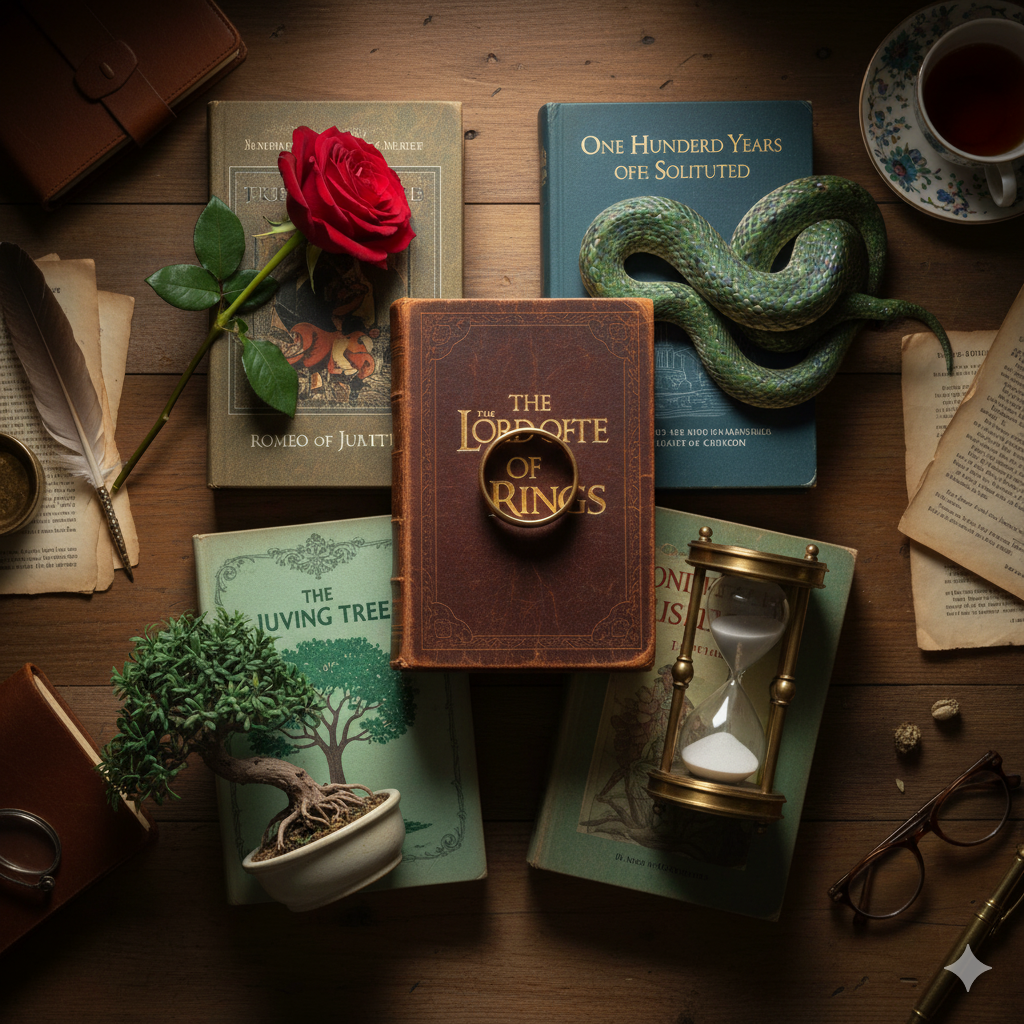
| Symbol | Work | Meaning |
|---|---|---|
| 🕊️ Dove | General | Peace, purity, spirituality |
| 🕯️ Light | Heart of Darkness | Hope, enlightenment |
| 🌳 Tree | The Giving Tree | Growth, sacrifice, love |
| 🪶 Mockingbird | To Kill a Mockingbird | Innocence, goodness |
| 💍 The One Ring | The Lord of the Rings | Power, corruption |
| 💎 Green Light | The Great Gatsby | Desire, unattainable dream |
| 🌹 Rose | Romeo and Juliet | Love, beauty, fragility |
| 🪞 Mirror | Snow White | Vanity, truth, reflection |
| 🌊 Ocean | Moby Dick | Fate, chaos, mystery |
| 🔥 Fire | Fahrenheit 451 | Destruction and rebirth |
| 🕰️ Clock | The Metamorphosis | Pressure, time, identity |
| 🐍 Snake | Bible / Harry Potter | Temptation, evil, wisdom |
| 💔 Broken Glass | Modern films | Emotional shattering |
| 🦋 Butterfly | Poetry & film | Transformation, freedom |
| 🌈 Rainbow | Modern fiction | Hope, diversity, promise |
These symbols bridge time — proving that even modern movies and novels borrow from classical imagery to communicate timeless truths.
🖋️ How Writers Use Symbolism (Techniques & Strategy)
- Foreshadowing: hinting at events through symbolic objects (e.g., storm clouds before tragedy).
- Contrast: using opposing symbols (light vs. dark) to highlight moral conflict.
- Color Symbolism: red for passion, blue for calm, white for purity.
- Motif Building: repeating one image (like a clock or mirror) to remind readers of a deeper message.
📊 Fact: Studies show that books with clear symbolic layers have 35% higher academic reference rates in university literature papers (Cambridge, 2023).
🧩 Modern Symbolism in Pop Culture
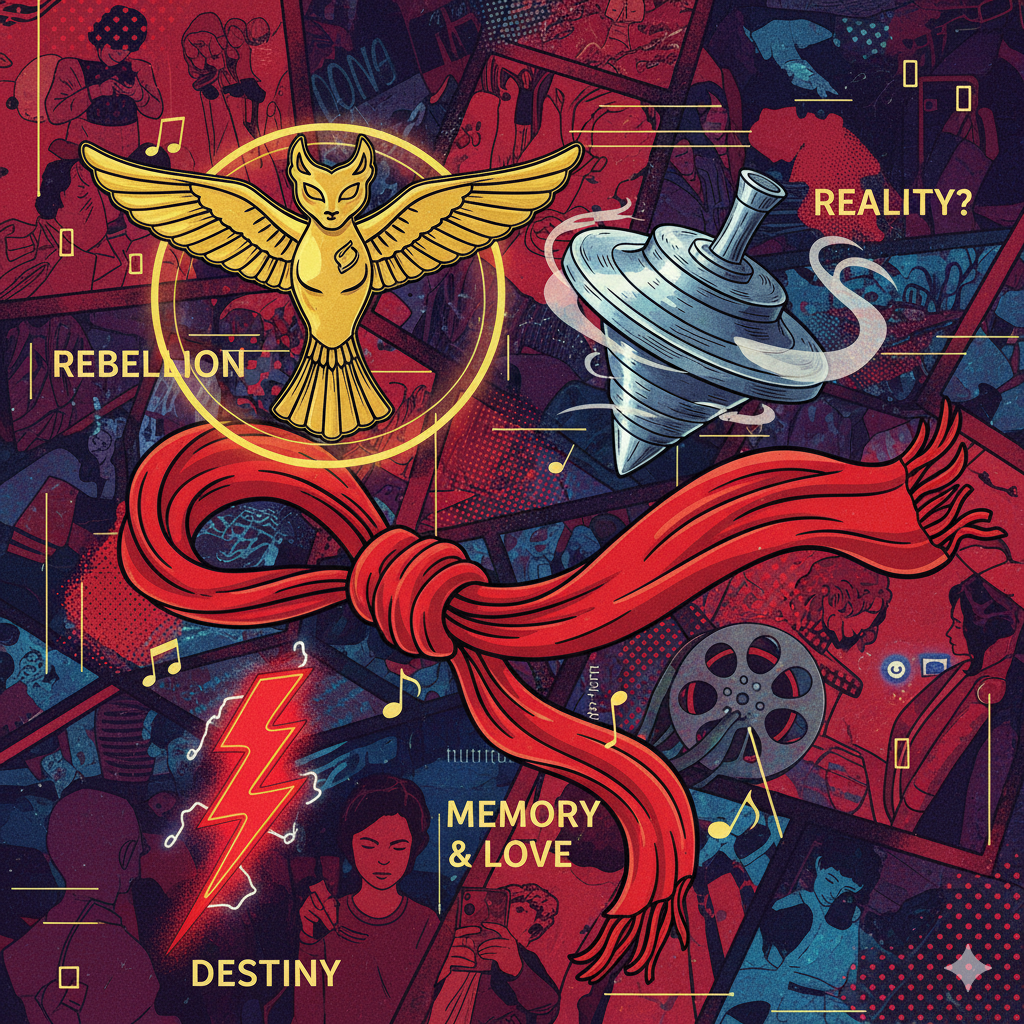
- 🎬 The Hunger Games — Mockingjay = rebellion and hope.
- 🧠 Inception — Spinning top = blurred line between dream and reality.
- ❤️ Taylor Swift’s “Red” era — red color as emotional intensity.
- ⚡ Harry Potter — Scar and snake = trauma, connection, danger.
This shows that symbolism isn’t just “old literature stuff” — it’s alive in songs, TV, and cinema too.
💡 Why Readers Should Understand Literary Symbols
- Makes reading more rewarding.
- Improves essay and analysis skills.
- Enhances emotional understanding of stories.
- Helps writers add deeper meaning to their own work.
👉 When you spot a symbol, you’re unlocking a secret code the author left for you.
🌿 Tips to Use Symbolism in Your Own Writing
- Choose symbols that match emotion (e.g., rain for sadness).
- Keep it subtle — let readers discover meaning.
- Repeat it naturally, not forcefully.
- Test it — ask “Would this object still hold meaning if it appeared in another story?”
- Don’t explain it directly — let symbolism speak silently.
🎯 Common Mistakes in Understanding Symbolism
- ❌ Overreading — not everything is symbolic.
- ❌ Missing cultural context — a symbol can mean opposite things in different cultures.
- ❌ Ignoring repetition — one-time objects rarely carry symbolic depth.
🧭 Conclusion: Why Symbolism Still Shapes Stories Today
From cave paintings to TikTok visuals, humans always used symbols to tell stories. Symbolism bridges what’s real and what’s emotional — helping writers express feelings too deep for plain words.
In literature, every symbol is a mirror — showing something invisible yet unforgettable.
If you want to truly understand a story, don’t just read the words. See the symbols.
❓ FAQs about Literary Symbols
1. What’s the difference between a symbol and a motif?
A symbol is a single image with meaning (like a rose = love). A motif is a recurring symbol or pattern used multiple times to build a theme.
2. Can colors be symbols?
Yes! Colors are some of the most powerful literary symbols — red for love, black for death, white for purity.
3. What’s the oldest known literary symbol?
The serpent — found in ancient myths, the Bible, and early epics — symbolizing temptation and power.
4. Why do authors hide meanings through symbols?
Because symbols make readers think and connect emotionally — turning reading into discovery, not instruction.
5. How can I find symbols in any book?
Look for repetition, emotion, and emphasis. If an author keeps mentioning something, there’s probably a deeper reason.

James Thornton is a researcher and writer focused on sleep science, lucid dreaming, and the neurological aspects of dream formation. With a strong academic foundation in cognitive science, James specializes in analyzing how dreams influence memory, creativity, and emotional health. His contributions to DreamingSign.com are well-known for their scientific accuracy and thought-provoking insights, helping readers understand the powerful connection between the brain and the dream world.