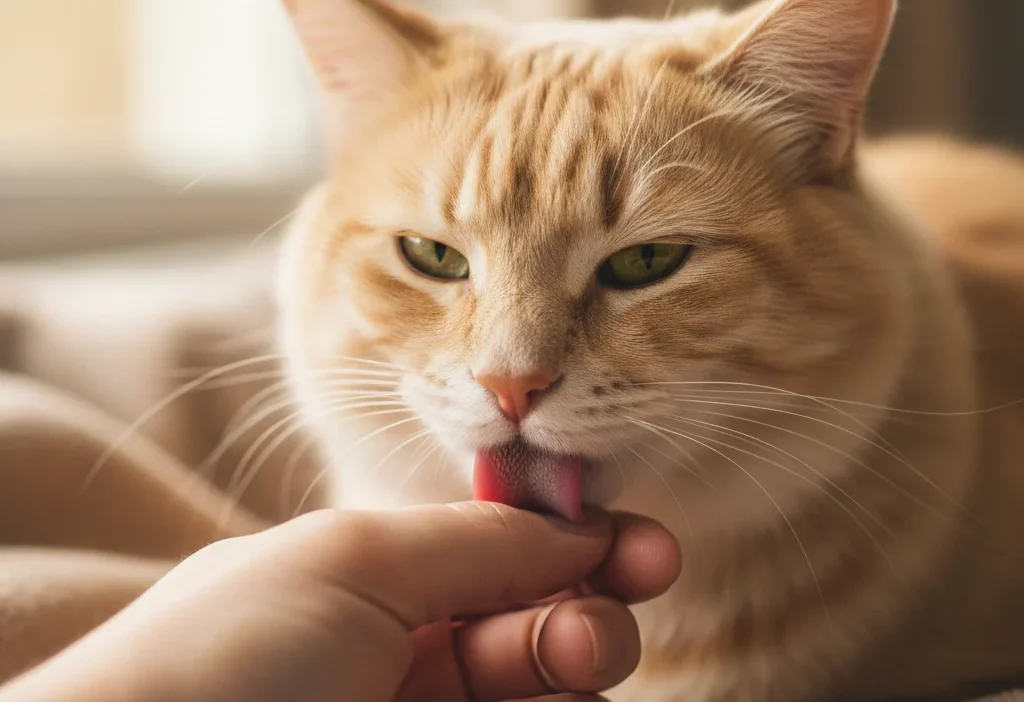
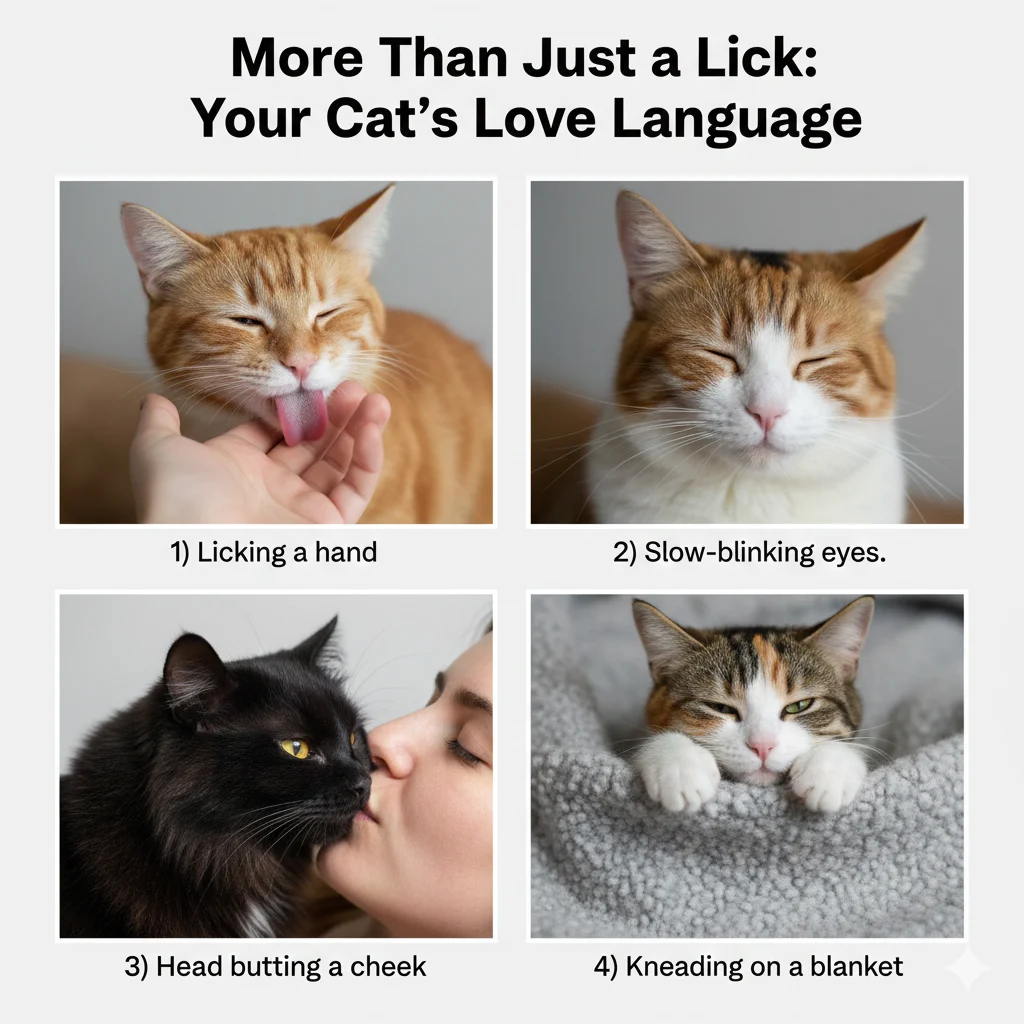
When a cat licks your hand, it most commonly means affection, bonding, or grooming you as part of their “family.” It can also sometimes signal curiosity, a request for attention, or a taste of salt on your skin.
You’re lounging on the couch, scrolling through your phone, when you feel it—that familiar, slightly rough, sandpaper-like sensation on your skin. You look down to find your feline friend meticulously licking your hand. If you’ve ever paused mid-pet to wonder, “What does this mean?” you’re not alone. That tiny, wet gesture is packed with more meaning than a midnight meow. Is it love? Is it a weird snack attempt? Or is your cat just trying to tell you something? Let’s unravel the mystery behind one of the most common yet puzzling signs of cat communication.
In short: A cat licking your hand = a feline “I love you” or “You’re part of my colony.” It’s a multi-purpose behavior rooted in instinct, trust, and social bonding.
🧠 What Does It Mean When a Cat Licks You?
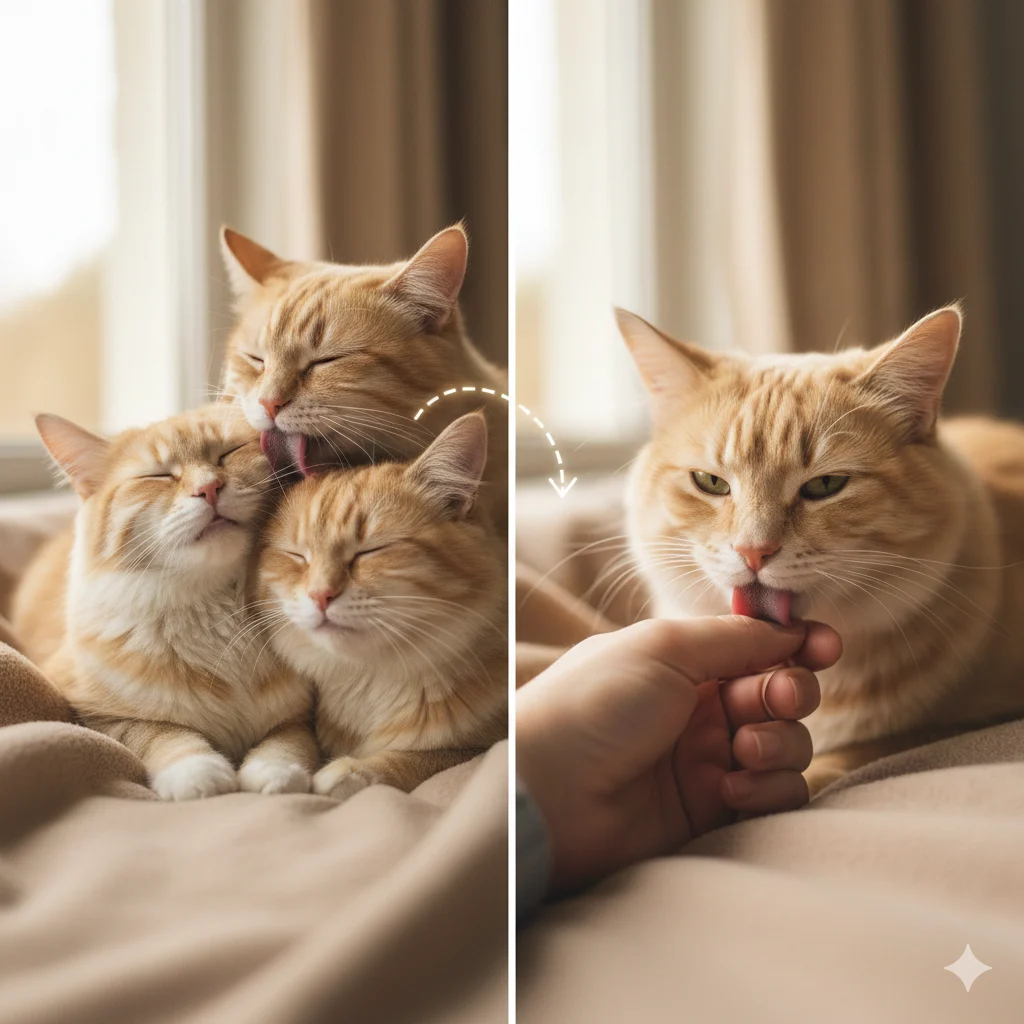
Contrary to the aloof cat stereotype, licking is a profoundly social behavior. In the wild, feline mothers lick their kittens to groom, comfort, and bond with them. As adults, cats who are friendly will groom each other—a behavior called allogrooming—to reinforce social ties within their colony.
When your cat transfers this behavior to you, it’s a huge compliment. They are essentially saying, “I consider you part of my family.” Beyond bonding, the act can have a few nuanced meanings:
- Affection & Trust: The primary meaning. Your cat feels safe and connected to you.
- Grooming You: They might think you need a little cleaning help, just like a littermate.
- Marking Territory: Cats have scent glands on their faces and saliva. Licking you deposits their scent, marking you as “theirs.”
- Seeking Attention: Sometimes it’s a gentle nudge for more pets or playtime.
- Curiosity & Taste: You might have an interesting scent (like lotion) or a salty taste from sweat on your skin.
In short: Hand Licking = Allogrooming = “You’re my trusted friend/family.”
📱 Where Is This Behavior Commonly Seen?
You’ll most often experience this feline kiss in relaxed, domestic settings. It’s a behavior of trust and contentment, so watch for it during:
- Quiet Cuddle Sessions 🛋️: When you’re both settled on the couch or bed.
- After Returning Home 🚪: As a greeting ritual after you’ve been away.
- During Petting ✋: Especially if you’ve hit just the right spot, it can overflow into a grooming response.
- Morning or Evening Routines 🌙: When your cat is feeling most sociable.
It’s the opposite of a formal behavior—it’s an intimate, casual, and friendly gesture reserved for those they hold dear.
🐾 7 Real “Conversation” Examples: Decoding the Lick
Think of your cat’s licks as messages in a conversation. Here’s what they might be saying:
- The “I Love You” Lick
- Scene: You’re calmly petting your purring cat.
- Action: They turn their head and give your hand a few deliberate, slow licks.
- Translation: “This is nice. I feel safe and happy with you.”
- The “You’re Mine” Lick
- Scene: You come home from the gym or outside.
- Action: Your cat sniffs your hand intently, then licks it thoroughly.
- Translation: “You smell strange. Let me fix that and put my scent back on you.”
- The “Snack Time?” Lick
- Scene: You’ve just finished eating something tasty.
- Action: Your cat licks your fingers persistently.
- Translation: “I smell chicken. Are you sure there’s none left for me?”
- The “Pet Me More” Lick
- Scene: You stop petting.
- Action: Your cat nudges your hand with their head, then licks it.
- Translation: “Hey, I wasn’t done. More pets, please.”
- The “Comforting” Lick
- Scene: You seem sad or stressed.
- Action: Your cat comes over, sits on your lap, and gently licks your hand.
- Translation: “You seem upset. I’m here for you.” (Yes, cats can be empathetic!)
- The “Grooming Session” Lick
- Scene: You’re both lounging.
- Action: Your cat alternates between grooming themselves and giving your arm a few licks.
- Translation: “We’re just hanging out, part of the group. Everything is as it should be.”
- The “Investigative” Lick
- Scene: You’ve applied new hand cream.
- Action: Sniff, sniff, tentative lick.
- Translation: “What is this new smell? Must taste-test.”
✅ When to Enjoy It and ❌ When to Be Cautious
✅ When It’s a Sweet Sign:
- During relaxed bonding time. It’s a compliment—accept it gracefully.
- If it’s gentle and infrequent. This is normal social behavior.
- When you want to reinforce your bond. Softly praise your cat or offer a slow blink (a cat “I love you” in return).
❌ When to Be Mindful:
- If the licking becomes obsessive or compulsive. This could indicate anxiety or a health issue.
- If it’s accompanied by other stress signs (like over-grooming themselves, hiding, or aggression).
- If you have allergies. Cat saliva contains allergens.
- If your cat is licking open wounds or using excessive pressure. Gently redirect them to a toy.
| Context | Example Scenario | Why It Works / What It Means |
|---|---|---|
| Affectionate Bonding | Cat licks you while purring on your lap. | This is pure social bonding. Your cat is content. |
| Territorial Marking | Cat licks you after you pet another animal. | They are re-establishing their scent on you. |
| Attention-Seeking | Cat licks you, then looks at the treat jar. | They’ve learned this behavior can get a specific reaction. |
| Underlying Anxiety | Cat licks you (or themselves) raw in patches. | This is a vet-worthy sign of stress or medical problems. |
What Does Tenacious Mean? The Secret You’re Probably Missing
🔄 Similar Feline Behaviors & What They Mean
Cats have a whole repertoire of behaviors that, like licking, communicate their feelings. Here’s how to tell them apart:
| Behavior | Meaning | How It’s Similar/Different to Licking |
|---|---|---|
| Kneading (Making Biscuits) | Contentment, nostalgia from kittenhood. | Similar: Sign of ultimate comfort and trust. Different: More self-soothing. |
| Head Butting (Bunting) | Affectionate greeting, marking with scent glands. | Similar: A way to mark you as “theirs.” Different: More of a “hello” than a grooming act. |
| Slow Blinking | The “cat kiss,” a sign of trust and love. | Similar: The ultimate sign of affection. Different: A silent visual signal instead of physical contact. |
| Gentle Nipping | Overstimulation, or “love bites” during play. | Different: Can signal the end of a petting session, whereas licking often continues it. |
| Bringing You “Gifts” | Teaching you to hunt, or presenting a prized offering. | Similar: An act of caring and including you in their world. Different: More instinctual hunting behavior. |
❓ FAQs About Cats Licking Your Hand
Is it okay to let my cat lick me?
For most people, yes. It’s generally safe if your cat is healthy, your skin isn’t broken, and you wash your hands afterward. Those with compromised immune systems or severe allergies should avoid it.
Why does my cat lick me and then bite me?
This is often called a “love bite” or a sign of overstimulation. The licking is affectionate, but the bite can mean they’ve had enough petting, or they’re transitioning into play mode. Watch their body language for tension.
My cat never licks me. Does he not like me?
Not at all! Cats show love in many ways. Yours might prefer slow blinks, following you, sleeping near you, or chirping. Every cat has a unique “love language.”
Should I lick my cat back?
We don’t recommend it! While mimicking cat behavior (like slow blinking) can build bonds, licking is a step too far for human-feline relations. A gentle stroke or soft verbal praise is a better reply.
What if the licking suddenly becomes excessive?
A sudden change in behavior is a red flag. Schedule a vet visit to rule out pain, anxiety, skin issues, or other medical conditions causing compulsive licking.
Conclusion
The next time you feel that familiar raspy tongue on your skin, you can smile knowing it’s far more than a quirky habit. It’s a window into your cat’s social world—a gesture that bridges the species gap to say, “You belong with me.” Whether it’s a grooming session, a scent-marking mission, or a simple request for more love, that little lick is a powerful token of trust from your feline companion. So, the next time your cat offers you a sandpaper kiss, consider returning the favor with a gentle pet, a soft word, or even a slow, loving blink right back at them. The conversation has always been happening; now, you finally understand the language.

Sophia Hayes is an expert in dream psychology and subconscious symbolism with over 10 years of experience in spiritual research and metaphysical sciences. Her passion lies in helping readers unlock the hidden messages within their dreams to improve emotional healing and personal growth. Through her deep understanding of spiritual symbolism, Sophia provides insightful, research-based interpretations that bridge science and spirituality. At DreamingSign.com, she shares transformative guidance to help individuals understand their dreams and connect with their higher selves.