
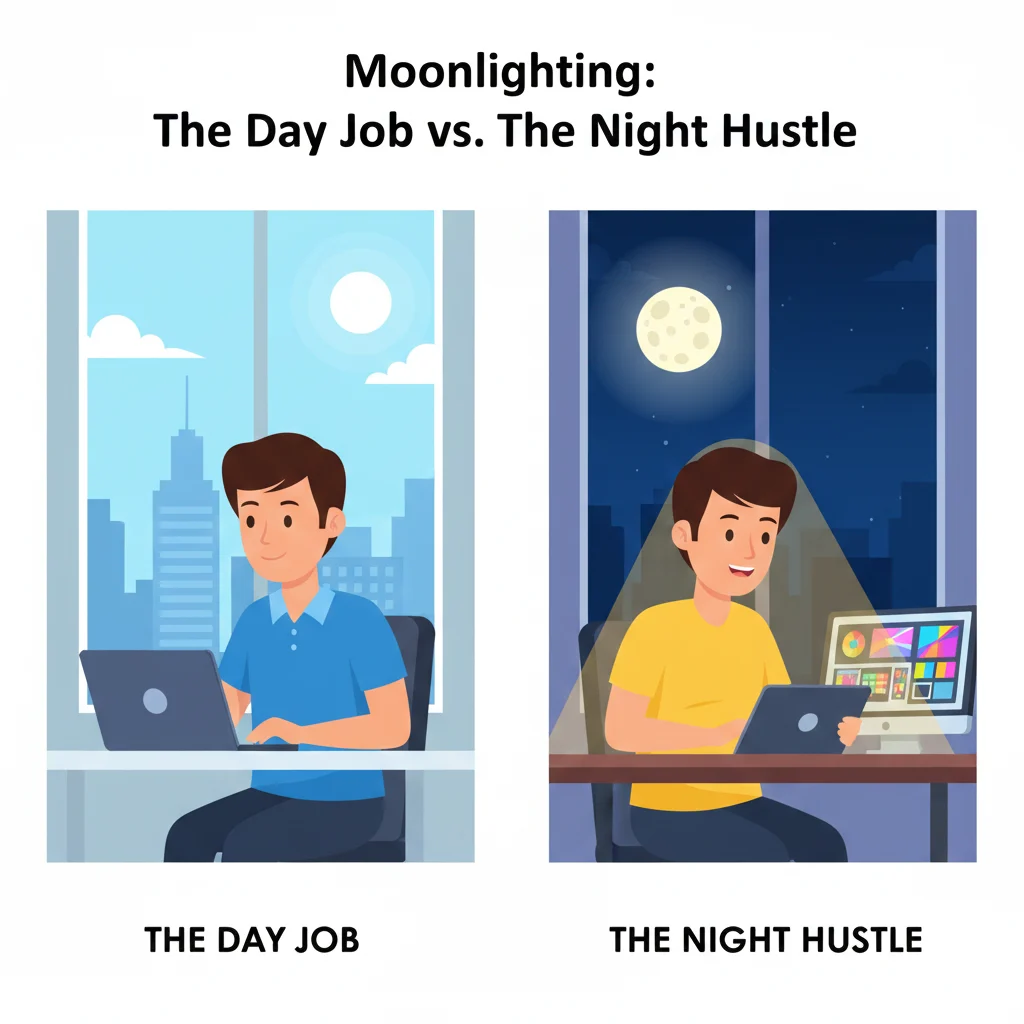
Moonlighting means “working a second job, typically at night or on weekends, in addition to one’s primary, full-time employment.” It’s a common, neutral term for having a side hustle while holding down a main job.
Picture this: You’re in a team meeting, and your coworker mentions they can’t make the Friday happy hour because they have to “work their moonlighting gig.” Heads nod in understanding. But you’re new to the workforce, or maybe you’ve just never heard the term. You sit there with a polite smile, wondering, “Is that like… working under the moonlight? Is it illegal? Is it a secret agent thing?” Don’t worry, we’ve all been there with confusing work jargon. The term “moonlighting” has been around for decades, but with the explosive growth of the gig economy and side hustles, it’s more relevant than ever. It’s not about espionage; it’s about ambition, extra income, and sometimes, pure necessity. Let’s shed some light on this common yet often-misunderstood concept.
🧠 What Does Moonlighting Mean in Text & at Work?
While “moonlighting” isn’t text slang in the same way as “LOL” or “ICYMI,” it’s a heavily used term in professional chats (Slack, Teams), career forums (Reddit, Blind), and social media discussions about work life. The name paints a perfect picture: your “moon” light work happens after your “sun” light, or primary, job is done.
In short: Moonlighting = Working a Second Job = Having a Side Hustle.
It implies that the second job is done outside the normal hours of the main job. Common examples include:
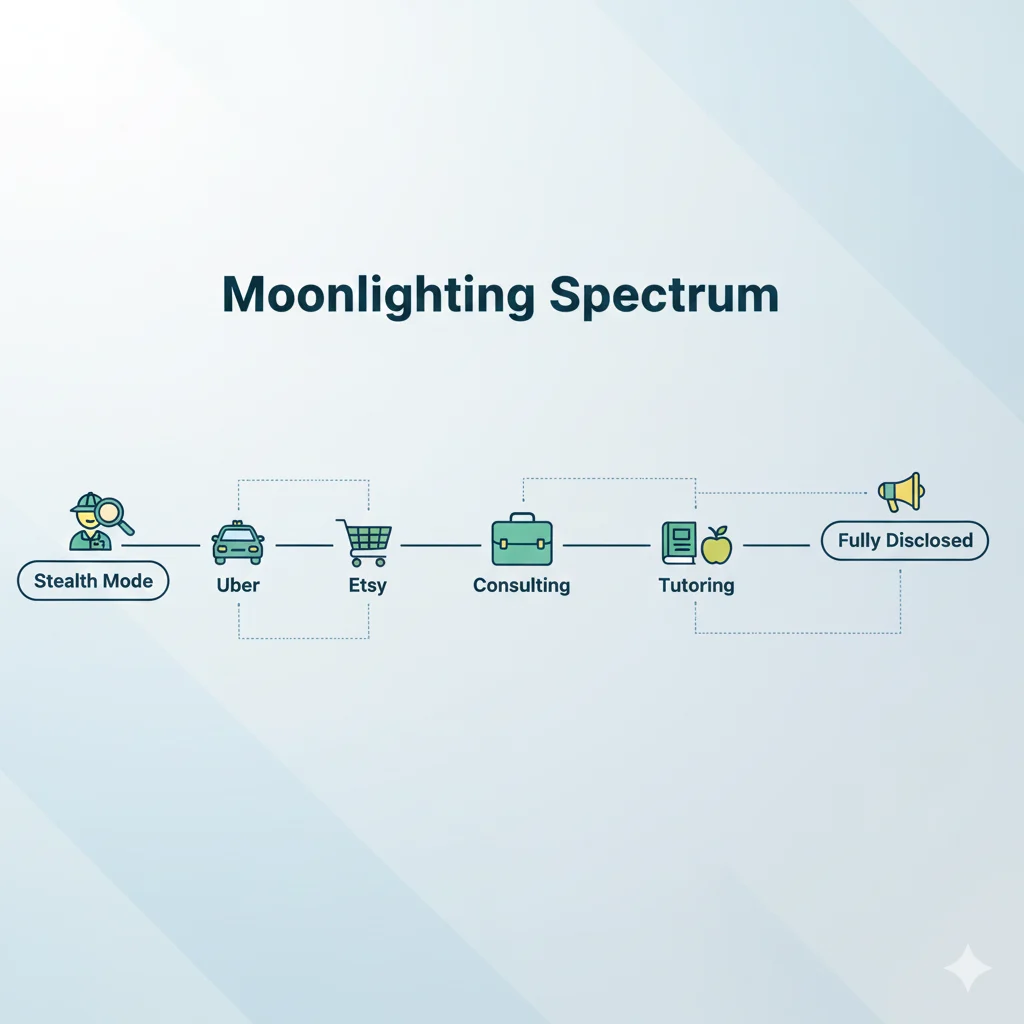
- A full-time teacher who drives for Uber on weekends.
- A software developer who builds websites for small clients at night.
- An office administrator who manages social media for a local boutique.
📱 Where Is “Moonlighting” Commonly Used?
- 💼 Workplace & Professional Chats: Discussions about company policies, ethics, and personal career moves.
- 💬 Career & Finance Forums (Reddit, Fishbowl, Blind): Where people ask, “Does anyone here moonlight? How do you manage it?”
- 📱 Social Media (LinkedIn, Twitter, TikTok): Under hashtags like #SideHustle, #PassionProject, #FinancialFreedom.
- 🎙️ Podcasts & Media: A frequent topic in personal finance, entrepreneurship, and career development content.
- 📜 Legal & HR Documents: In employment contracts and handbooks regarding conflict of interest and dual employment.
Tone: It’s a standard, descriptive term. It’s not inherently casual or formal; it’s the official word for the concept. The context (a formal HR warning vs. a friend’s casual advice) determines its tone.
What Does Inversely Proportional Mean? The Hidden Truth
💬 Examples of “Moonlighting” in Conversation
- In a team chat:
- A: “Hey, can you cover my on-call shift next Saturday? I have a family thing.”
- B: “Sorry, I can’t. My moonlighting gig at the brewery has me scheduled all weekend.”
- Career advice forum:
- Post: “Thinking of moonlighting as a virtual assistant. Any tips for managing time with a 9-5?”
- Friends texting:
- A: “You’re always busy! When do you sleep?”
- B: “lol, the moonlighting life is real 😅 The freelance coding projects keep piling up, but so does the extra cash!”
- On LinkedIn:
- Post: “Grateful my moonlighting as a content writer during my early marketing years gave me the portfolio to land my dream job.”
- Discussing a contract:
- HR: “Please review Section 4.2 on our moonlighting policy. We require disclosure of any outside employment.”
🕓 When to Use and When Not to Use “Moonlighting”
✅ WHEN TO USE:
- When discussing career moves or extra income streams with colleagues or mentors.
- In online forums seeking advice on balancing multiple jobs.
- When reading or discussing your employment contract.
- Talking casually about your side projects with friends.
❌ WHEN NOT TO USE:
- As a verb to describe your main job (“I moonlight as an accountant” if it’s your only job – that’s incorrect).
- In a formal performance review to complain about being tired (it might reflect poorly on your time management).
- If your company strictly prohibits it and you’re disclosing it indiscreetly.
| Context | Example Phrase | Why It Works / Doesn’t |
|---|---|---|
| Informal Career Chat | “Yeah, I’ve been moonlighting as a photographer to build my portfolio.” | Neutral and accurately describes the side activity. |
| Formal HR Disclosure | “I wish to formally disclose my moonlighting employment with XYZ Company.” | Uses the correct, formal terminology found in policies. |
| Asking for Advice | “How do you handle taxes when moonlighting?” | Clear and specific for financial/career forums. |
🔄 Similar Slang Words or Alternatives
| Slang / Term | Meaning | Key Difference / When to Use |
|---|---|---|
| Side Hustle | A secondary job or business for extra income. | More modern, casual, and often implies entrepreneurship. Very popular in social media. |
| Gig | A single, short-term job or project. | More focused on a single task. “I have a gig this weekend” vs. “I have a moonlighting job.” |
| Freelancing | Working independently for various clients. | Focuses on the nature of the work (independent contracts), not necessarily its timing relative to a main job. |
| Dual Employment | The formal, HR/legal term for holding two jobs. | Dry, bureaucratic. Used in official policy documents. |
| Part-Time Job | Employment with fewer hours than full-time. | Doesn’t specify that the person already has a primary full-time job. |
❓ FAQs About Moonlighting
Q: Is moonlighting illegal?
A: No, moonlighting itself is not illegal. However, it can violate your employment contract if it creates a conflict of interest, uses company resources, or violates a non-compete clause. Always check your company handbook.
Q: Do I have to tell my boss I’m moonlighting?
A: It depends on your company policy. Many require disclosure, especially if the work is in a similar industry. Ethically, it’s wise to be transparent if there’s any potential conflict.
Q: What’s the difference between moonlighting and a side hustle?
A: They are essentially synonyms. “Moonlighting” is the traditional, formal term. “Side hustle” is the newer, more energetic, and entrepreneurial slang. A side hustle can sometimes grow to become a main hustle.
Q: Why is it called moonlighting?
A: The term dates back to the early 20th century, literally referring to the idea of working by the light of the moon after your day job was done.
Conclusion
So, the next time you hear someone talk about “moonlighting,” you won’t picture them secretly gardening at midnight. You’ll understand it’s about the modern reality of piecing together a career and income in a multifaceted world. Whether driven by financial goals, creative passions, or just the thrill of a new challenge, moonlighting is a powerful tool. But like any tool, it must be used wisely. Know your company’s rules, manage your time and energy fiercely, and ensure your side work doesn’t cast a shadow on your primary responsibilities. Understand the term, weigh the pros and cons, and you’ll be able to navigate conversations—and perhaps even a second job yourself—with confidence.

James Thornton is a researcher and writer focused on sleep science, lucid dreaming, and the neurological aspects of dream formation. With a strong academic foundation in cognitive science, James specializes in analyzing how dreams influence memory, creativity, and emotional health. His contributions to DreamingSign.com are well-known for their scientific accuracy and thought-provoking insights, helping readers understand the powerful connection between the brain and the dream world.