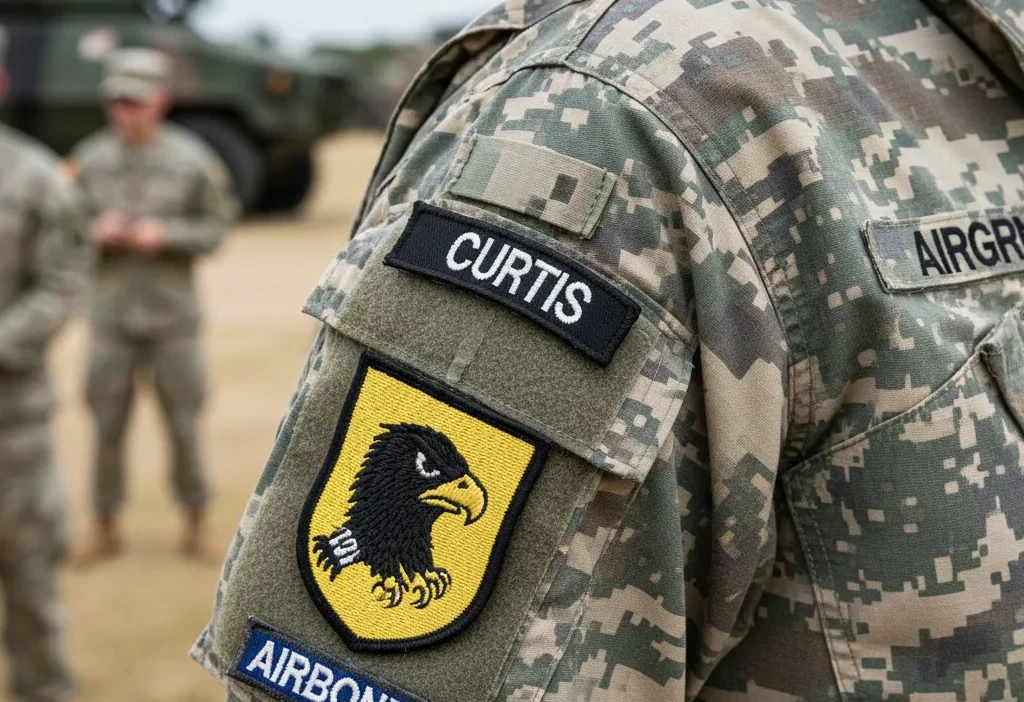
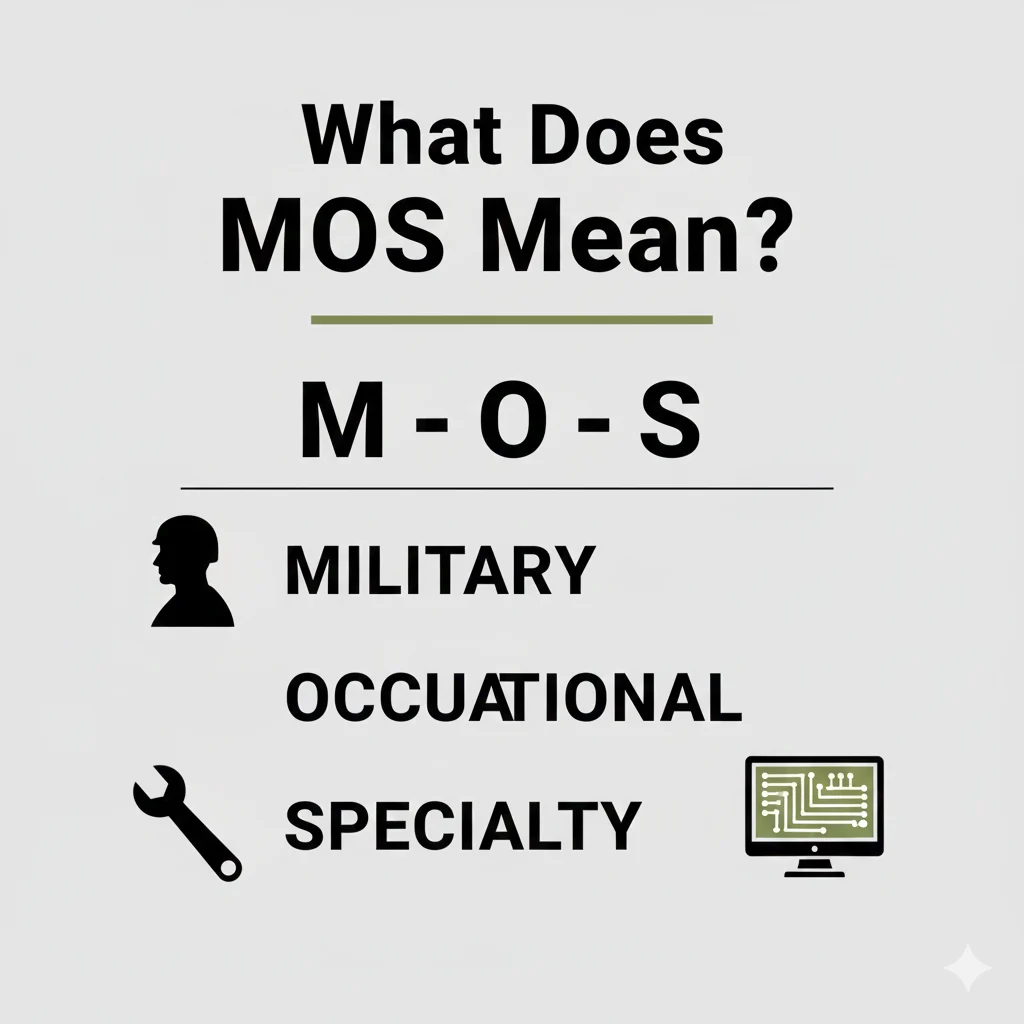
MOS stands for “Military Occupational Specialty.” It’s the official code and title assigned to a service member’s specific job, skill, or career field within the U.S. Army, Marine Corps, and Air Force (though the Air Force uses the similar term “AFSC”).
You’re scrolling through a military forum or maybe listening to a group of veterans share stories. The chatter is full of numbers and acronyms—”I was an 11B,” “She’s a 68W,” “Back in my 0311 days…” You nod along, but in your head, you’re thinking, “What do all these codes mean? Is this some kind of secret language?” If you’ve ever been puzzled by this alphanumeric jargon, you’ve bumped into the backbone of military career management: the MOS. Let’s decode it.
MOS means “Military Occupational Specialty.” It’s a formal, standardized way the U.S. military identifies and classifies every specific job, from Infantry to Cyber Operations. It’s not slang; it’s an essential personnel code.
🧠 What Does MOS Mean in Text & Military Talk?
While “MOS” is primarily an official military term, it frequently appears in text messages, social media bios, and online discussions among service members and veterans. In this context, it’s a quick way to state one’s job or ask about another’s.
The full form is Military Occupational Specialty. Think of it as a job title encoded into a combination of numbers and letters. Each branch of the U.S. military has its own MOS system (though the Air Force uses “AFSC” – Air Force Specialty Code, and the Navy/Coast Guard use “NEC” – Navy Enlisted Classification).
Example in a sentence: “Before I became a pilot, my MOS was 15T, a Black Hawk helicopter repairer.”
In short: MOS = Military Occupational Specialty = Your specific, coded job in the Army or Marines.
📱 Where Is MOS Commonly Used?
This term is woven into the fabric of military life and its digital extensions:
- 🪖 Official & Administrative Contexts: Personnel files, orders, performance evaluations, and training documents.
- 💬 Online Forums & Social Media (Facebook, Reddit): Veterans and active-duty members use it to connect over shared experiences. (e.g., “Any former 35F here?”)
- 📱 Texting & Messaging: Quickly explaining one’s role or daily life. (e.g., “My MOS has me stuck in the motor pool all day.”)
- 🎮 Gaming Chats: Military-style games often use MOS-like classifications, leading to real-world comparisons.
Tone: It is formal in official use but becomes casual and identificatory in social and digital communication among military communities. It’s not used in flirty contexts; it’s more about professional identity and camaraderie.
💬 Examples of MOS in Conversation
Here’s how “MOS” pops up in real digital chats:
- In a veteran’s group chat:
A: Thinking about using my GI Bill for IT. Anyone else make the switch?
B: Yeah, man. Was a 25B (IT Specialist). It set me up perfectly. - A spouse texting:
A: What does your husband actually do all day?
B: His MOS is 92G (Food Service Specialist). So, he’s basically running the kitchen! - On a social media bio:
“Proud Army Veteran | 68W (Combat Medic) | 🏥” - Planning a meet-up:
A: We should get the old team together.
B: For sure. I’ll hit up the other 0311s (Marine Riflemen). - Explaining a meme:
A: Why is this mechanic meme so accurate? 😂
B: Because every 91B (Wheeled Vehicle Mechanic) has lived this.
🕓 When to Use and When Not to Use “MOS”
✅ WHEN TO USE:
- When talking with current/former military personnel.
- In online forums or groups dedicated to military topics.
- When filling out official forms or discussing career history within the military context.
- When writing a bio that highlights your service background.
❌ WHEN NOT TO USE:
- In formal civilian business documents (use the civilian job title equivalent).
- When talking to someone with zero military knowledge without providing explanation.
- In urgent or crisis communication where clarity for all is critical.
📊 Context Comparison Table
| Context | Example Phrase | Why It Works / Doesn’t Work |
|---|---|---|
| Veteran Chat | “Best part of being an 11B was the camaraderie.” | Identifies shared experience instantly. |
| Civilian Resume | “MOS: 35N (Signals Intelligence Analyst)” vs. Better: “Signals Intelligence Analyst” | MOS codes are internal; civilians need clear job titles. |
| Formal Report | “The 12B (Combat Engineer) squad completed the breach.” | Appropriate within official military correspondence. |
| Explaining to Family | “My MOS, which is basically my job, is dental tech.” | Using the term but immediately translating for clarity. |
🔄 Similar Military Slang & Job Codes
While MOS is specific to Army/Marines, all branches have their own lingo for jobs.
| Slang/Acronym | Meaning | Branch | When It’s Used |
|---|---|---|---|
| AFSC | Air Force Specialty Code | U.S. Air Force | The Air Force equivalent of an MOS. |
| NEC | Navy Enlisted Classification | U.S. Navy & Coast Guard | The Navy/Coast Guard system for classifying enlisted jobs. |
| Rate | Enlisted Job Title & Rank | U.S. Navy & Coast Guard | Often combined with NEC (e.g., “I’m an IT with a NEC for cybersecurity.”) |
| POG / Grunt | (Non-Slang Contrast) | All Branches | POG: “Person Other than Grunt” (support jobs). Grunt: Infantry (combat jobs). Used informally to describe general job categories. |
| “My A-School” | Advanced Training School | Navy, Coast Guard, Air Force | Refers to the school where they learned their specific job/skill. |
📚 The History and Importance of the MOS System
The MOS system was developed to bring order to the massive complexity of military manpower. It ensures that the right person with the right skills is in the right position. Each code (e.g., 13F for Fire Support Specialist) dictates exactly what training a soldier receives, what their duties are, and how they fit into the larger unit structure. It’s more than a code; it’s a service member’s professional identity for the duration of their career, often shaping their path long after they leave the service.
❓ FAQs About MOS
Q: Is MOS only for enlisted personnel?
A: No. While most commonly discussed for enlisted members, officers have codes too, often called “Area of Concentration” (AOC) or “Branch” codes in the Army (e.g., 11A for Infantry Officer).
Q: Can you change your MOS?
A: Yes, but it’s not always easy. It may require “reclassifying,” which involves new training, contracts, and the needs of the military. Some changes are common upon promotion.
Q: How many MOS fields exist?
A: There are over 150 different MOS series in the Army alone, each with multiple sub-specialties, covering everything from infantry (11 series) to cyber (17 series) to band (42 series).
Q: Do Marines and Army share the same MOS codes?
A: Sometimes, but not always. For example, 11B is an Army Infantryman, while 0311 is a Marine Rifleman. The systems are separate but similar in concept.
Q: Should I put my MOS on my civilian resume?
A: It’s recommended to translate it. List the official job title and your responsibilities in plain language. You can include the MOS in parentheses for recruiters who understand it, but the primary description should be civilian-friendly.
🎯 Conclusion
So, the next time you see “MOS” or a string like 19D or 0331, you’ll know it’s not random military babble. It’s a precise key to a person’s role, skills, and often, a major chapter of their life. The MOS (Military Occupational Specialty) is the definitive answer to “What do you do in the military?” Understanding it opens a window into the highly structured world of military service, whether you’re deciphering a veteran’s story, writing about military topics, or simply satisfying your own curiosity. It’s the code behind the uniform.

James Thornton is a researcher and writer focused on sleep science, lucid dreaming, and the neurological aspects of dream formation. With a strong academic foundation in cognitive science, James specializes in analyzing how dreams influence memory, creativity, and emotional health. His contributions to DreamingSign.com are well-known for their scientific accuracy and thought-provoking insights, helping readers understand the powerful connection between the brain and the dream world.