
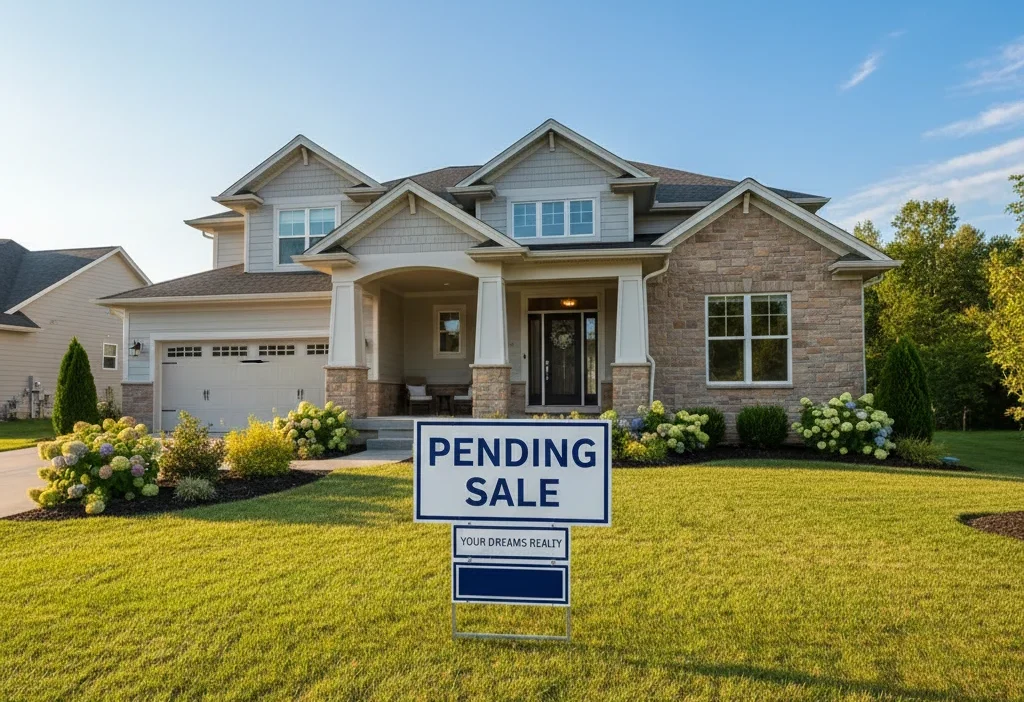
: In real estate, a “pending” status on a house for sale means the seller has accepted an offer from a buyer, all contingencies are being satisfied, and the sale is moving toward closing. It’s not yet a done deal, but it’s under contract
You’ve been scrolling through listings for weeks, finally found “The One,” and your heart does a little flip. You click for more details, ready to book a viewing, and then you see it—right next to the price, in bold letters: PENDING. Your excitement plummets. Is it gone? Is there still a chance? What does “pending” even really mean? If you’ve ever felt that confusing mix of hope and disappointment, you’re not alone. In the fast-paced world of real estate, statuses like “Active,” “Contingent,” and “Pending” create a language all their own. Understanding “pending” is crucial, whether you’re a hopeful buyer, a curious neighbor, or a seller navigating offers. Let’s decode what this common but often misunderstood term means for your home-buying or selling journey.
In short: “Pending” = The seller has accepted an offer and the deal is in its final stages, but it hasn’t officially closed yet.
What Does “Pending” Status Mean on a House?
When a house listing status changes from “Active” to “Pending,” it signals a significant shift in the sales process. It means the seller has formally accepted a buyer’s offer, and both parties have signed a purchase agreement. The property is now under contract and is moving through the final steps toward closing.
However—and this is the key part—”pending” is not the same as “sold.” The sale is not yet finalized. The deal is still within the agreed-upon contingency period. These are conditions that must be met for the sale to proceed, such as the buyer securing financing, the home appraising for at least the sale price, and a home inspection revealing no major, deal-breaking issues. The “pending” phase is the period where these contingencies are being checked off. While the likelihood of the sale falling through is lower than in earlier stages, it can still happen if a major contingency fails.
In short: Pending = Under Contract = Final stages before closing, but not a guaranteed sale yet.
Why Is Understanding “Pending” Important?
For Buyers, seeing a “pending” status is a signal to manage expectations. While you can sometimes still submit a backup offer (more on that later), you should generally keep looking and not get your hopes up for that specific property. It saves you time and emotional energy.
For Sellers, changing your listing to “pending” tells the market you are in serious negotiations. It typically reduces the influx of new showings and offers, allowing you to focus on working with your chosen buyer to get to the closing table.
For Everyone Else, it’s a handy way to gauge market activity in your neighborhood. A lot of “pending” signs popping up quickly often indicates a hot, competitive market.
What Does Illiterate Mean? The Real Explanation Finally Told
The “Pending” Process: A Step-by-Step Timeline
Let’s break down what typically happens during the pending period. Think of it as the home stretch of a race.
- Offer Accepted & Contract Signed: The journey begins when the seller signs the buyer’s offer, creating a legally binding purchase agreement.
- Earnest Money Deposited: The buyer puts down earnest money (a good-faith deposit) into an escrow account.
- Contingency Period Begins (The “Pending” Phase): This is the core of the pending status. The clock starts ticking on several key deadlines:
- Inspection Contingency: The buyer conducts a professional home inspection. They can then ask for repairs, credits, or potentially walk away if issues are severe.
- Appraisal Contingency: The buyer’s lender orders an appraisal to ensure the home’s value supports the loan amount.
- Financing Contingency: The buyer formally applies for their mortgage, and the lender underwrites the loan.
- Title Search: A title company ensures the property can be sold free of clear legal claims or liens.
- Contingencies Removed: As each condition is satisfied, the corresponding contingency is “waived” or “released” by the buyer. The deal becomes more solid.
- Final Walk-Through: Just before closing (often 24 hours prior), the buyer does a final walk-through to ensure the property is in the agreed-upon condition.
- Closing: If all goes well, the “pending” status finally changes to “SOLD.” All parties sign the final paperwork, funds are transferred, and keys are handed over.
Can You Make an Offer on a Pending House?
Here’s a common question with a nuanced answer: Yes, often you can, but your chances are slimmer.
Most listings remain technically “active” in the Multiple Listing Service (MLS) during the pending phase, though they are marked as pending. As a buyer, you can usually still submit what’s called a “backup offer.” This means you are next in line if the current deal falls apart. Sellers may be more inclined to accept a strong backup offer for security. Your agent can contact the listing agent to see if the seller is accepting backups. However, don’t wait around—keep viewing other homes.
Pending vs. Contingent: What’s the Difference?
This is where many people get confused. While both mean the house is under contract, there’s a subtle but important distinction.
| Status | What It Means | Level of Certainty | Can You Still Tour? |
|---|---|---|---|
| 🟡 Contingent | An offer is accepted, but major contingencies (like inspection or sale of buyer’s home) are still pending. The deal is more vulnerable. | Lower. The sale has more “outs” for the buyer. | Often, yes. Listings may say “Contingent – Show” or “Kick-Out Clause.” |
| 🔴 Pending | Contingencies are being satisfied or have been mostly met. The sale is in its final stages toward closing. | Higher. The deal is more likely to close, but not guaranteed. | Usually no. The seller typically stops showings. |
Think of “contingent” as the early, more uncertain phase of being under contract, and “pending” as the later, more stable phase. However, note that some real estate boards and websites use the terms interchangeably.
When a Pending Sale Falls Through: What Happens?
A pending status doesn’t guarantee a sale. Deals can fall apart during this phase. Common reasons include:
- Failed Inspection: Major, undisclosed issues are found (e.g., foundation problems, severe mold).
- Low Appraisal: The home appraises for less than the sale price, and the buyer and seller can’t renegotiate.
- Financing Denied: The buyer’s mortgage loan is not approved.
- Title Issues: Unresolved liens or ownership disputes emerge.
- Cold Feet: Buyer or seller gets nervous and backs out (which can have financial penalties).
If a deal falls through, the listing status usually reverts to “Active” or “Back on Market.” For buyers, this is a potential opportunity to swoop in with an offer.
FAQs About “Pending” House Status
Q: How long does a house stay pending?
A: Typically between 30 to 60 days, but it can vary based on the complexity of the transaction, the type of loan, and local market customs. Cash sales can sometimes close in as little as two weeks.
Q: Is a pending sale a done deal?
A: No. While it’s closer to the finish line than a “contingent” status, a pending sale is not finalized until all documents are signed at closing and funds are disbursed.
Q: Should I even look at pending listings?
A: Yes, but with a strategy. Don’t pin your dreams on them. Instead, note them and ask your agent to set up an alert if their status changes back to “Active.” Making a backup offer can also be a smart move in competitive markets.
Q: Can a seller accept another offer while pending?
A: Generally, no. The signed purchase agreement is legally binding. Accepting another offer would be a breach of contract, unless a specific contingency (like a “home sale” contingency) fails, releasing the seller.
Q: What comes after pending?
A: The final status is “SOLD” or “CLOSED.” This is recorded in the MLS once the transaction is complete, the deed has been transferred, and the keys have been handed over.
Conclusion
Seeing that “pending” tag on your dream home can feel like a closed door, but it’s more accurately a door that’s almost shut. Understanding this key real estate term empowers you to navigate the market with clarity, whether you’re buying or selling. For buyers, it means managing hope, considering backup offers, and continuing the search. For sellers, it marks the exciting, yet cautious, final leg of the journey to the closing table.
The real estate process is full of specific jargon, but each term—especially pending—simply marks a step in the dance between buyer and seller. By knowing the steps, you can move with more confidence and make informed decisions on your path to a new home.

Olivia Bennett is a lifestyle researcher and holistic wellness advocate specializing in mindfulness, dream healing, and manifestation techniques. With a background in psychology and meditation therapy, Olivia writes to empower readers to achieve mental clarity and emotional balance through dream awareness. Her articles provide practical tips, spiritual insights, and real-life strategies for boosting intuition and creating a more meaningful life. Olivia’s work at DreamingSign.com inspires readers to use dreams as a tool for personal transformation.